
UGC Script Generator for Instagram Reels
A hand reaches into a sun-drenched frame to adjust a glass on a marble countertop. There is no voiceover for the first two seconds, just the crisp sound of ice clinking. This is the visual pacing of a high-performing Instagram Reel. Unlike the erratic, high-energy jump cuts that dominate TikTok, Reels UGC thrives on an aesthetic of curated realism. It is polished but reachable. When a creator opens with a direct address to the camera, the retention graph usually dips immediately; when they open with an atmospheric 'b-roll' shot followed by a text overlay, the viewer lingers. WeKlapp focuses on this specific cadence. It understands that a script for Instagram isn't just a list of lines to speak—it is a sequence of visual beats designed to stop the scroll in a feed that prioritizes visual harmony over chaotic movement. We build scripts that respect the platform's slower burn.
Scripts shaped to 20 to 45 seconds
Hooks tested for the first 3 seconds of attention
Tone calibrated to be polished, aesthetic, lifestyle-led
Storyboards, revisions, and Word export included
14 Outfits. One Carry-On. Lisbon.
Hook: “Seven days in Lisbon. Fourteen outfits. This is the only bag I brought.”
Angle: A slow, cinematic packing reveal that proves one carry-on can hold a full Lisbon wardrobe — compression cubes and cobblestone included.
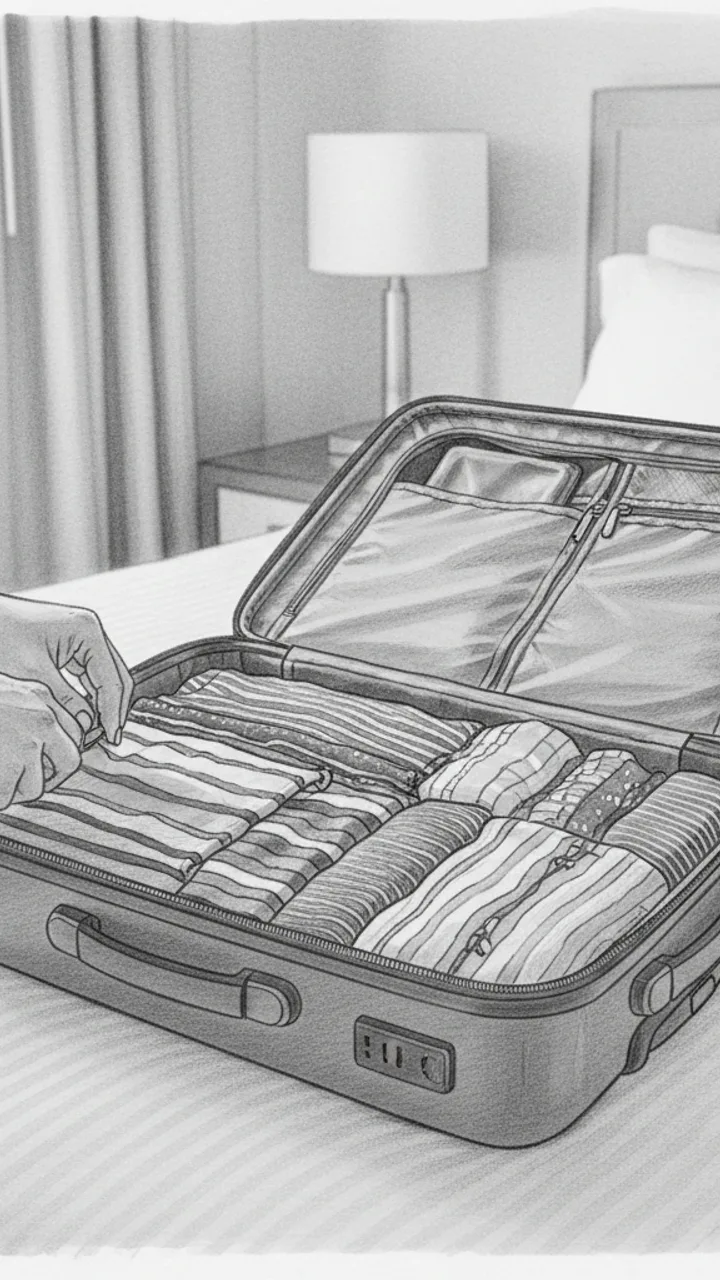
Hook
0:00 - 0:03 · 3s
Visual: Extreme close-up, hands unzipping a Range Travel Co. carry-on flat on a bed. Clothes are tightly packed, colorful, organized. Slow pull-back to reveal the full bag. Text overlay centered: '14 OUTFITS. ONE CARRY-ON. LISBON.'
Audio: Seven days in Lisbon. Fourteen outfits. This is the only bag I brought.
Note: No music intro — drop straight into ambient sound of zipper, then soft acoustic guitar fades in at 0:02. Hook line doubles as thumbnail headline.
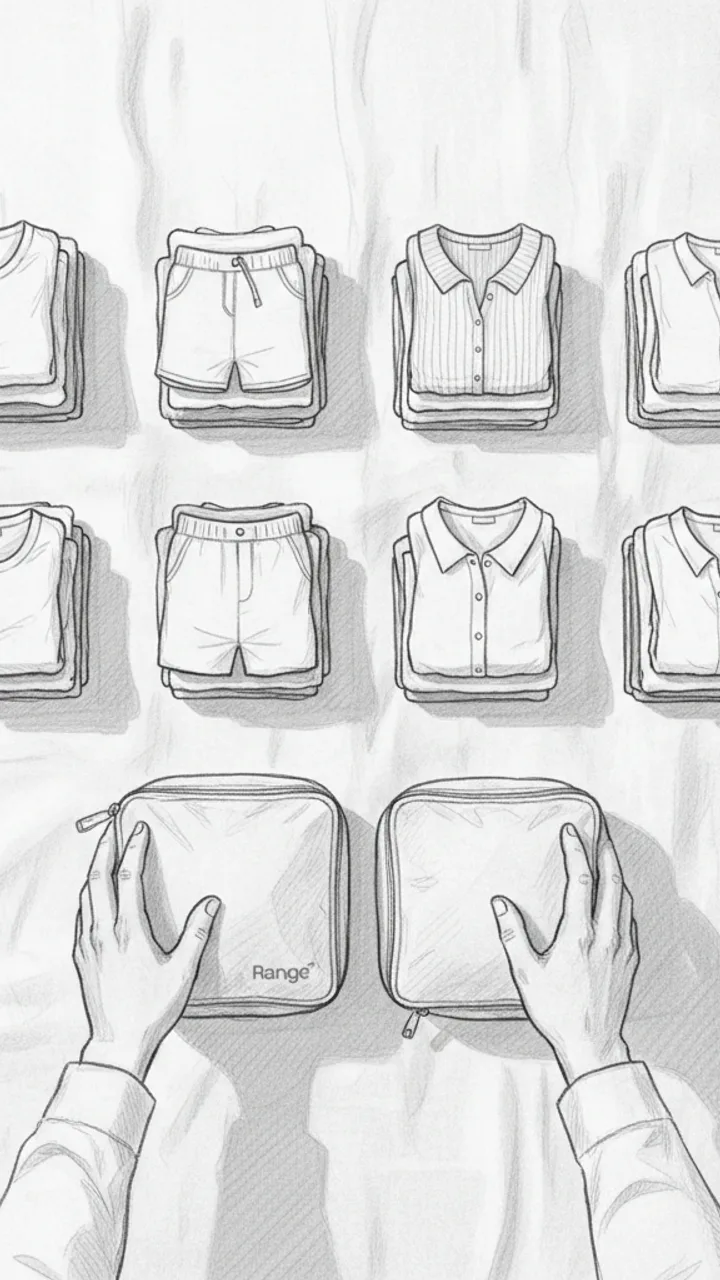
The Pack
0:03 - 0:18 · 15s
Visual: Flat lay overhead shot on white linen bed. Hands pull out two Range compression cubes and begin placing outfits side by side — one daytime look, one evening look, repeated across seven small stacks. Text overlays appear sequentially over each stack: 'Day 1', 'Day 2' ... 'Day 7'. Cut to close-up of a cube being compressed and zipped — fabric visibly flattens. Final cut: bag zipped shut, standing upright.
Audio: I used two compression cubes — one for day looks, one for nights. Each cube holds a full week on its own. For me, that's the difference between checking a bag and not. Everything fits, and nothing wrinkles the way I expected it to.
Note: Voice is calm, measured — not rushed. Let the visual breathe. Overlay text should feel editorial, not salesy.
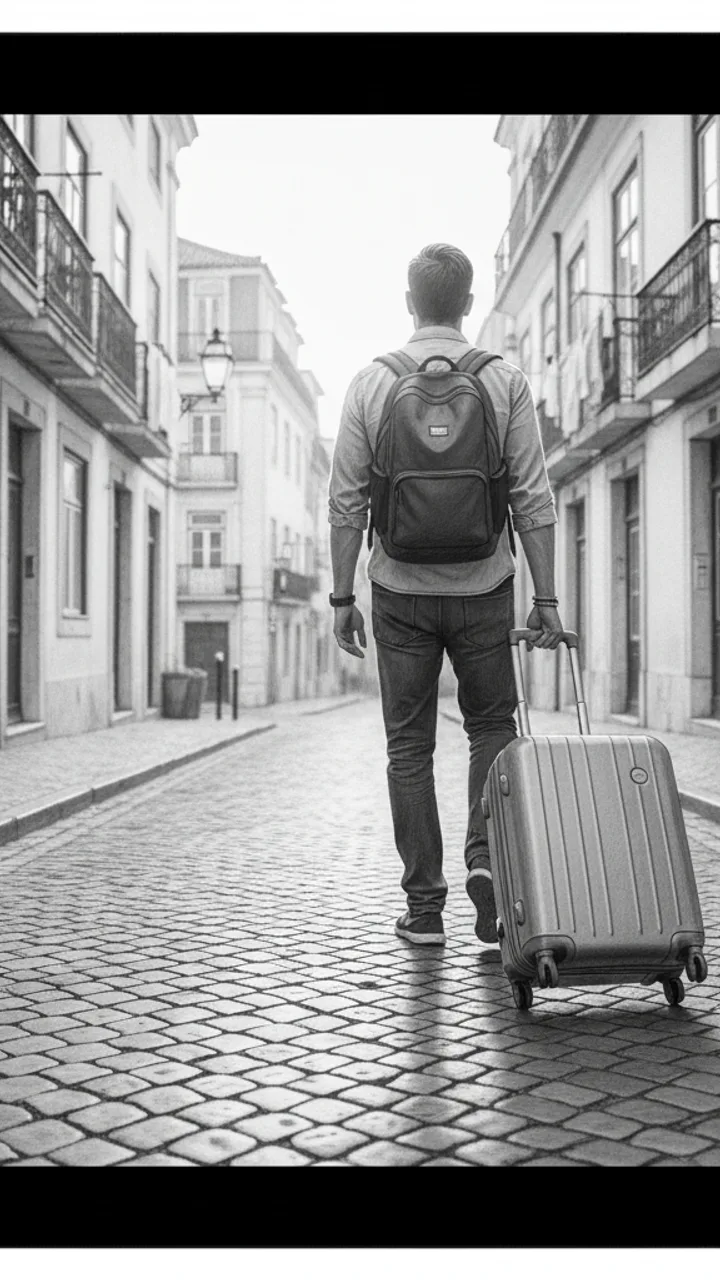
Lisbon in Motion
0:18 - 0:30 · 12s
Visual: Golden hour. Handheld follow shot from behind — creator rolling the bag down a narrow Alfama cobblestone street. Cut to low ground-level angle showing wheels rolling over uneven stone. Cut to creator pausing at a viewpoint, Tagus River behind them, bag at their side. Text overlay bottom-left: 'Alfama, Lisbon'.
Audio: The cobblestones in Alfama will test any bag. These wheels held up the whole week — no dragging, no tipping. That part surprised me.
Note: Ground-level wheel shot is critical — 2 to 3 seconds minimum. This is the product proof moment. Keep it observational, not promotional.
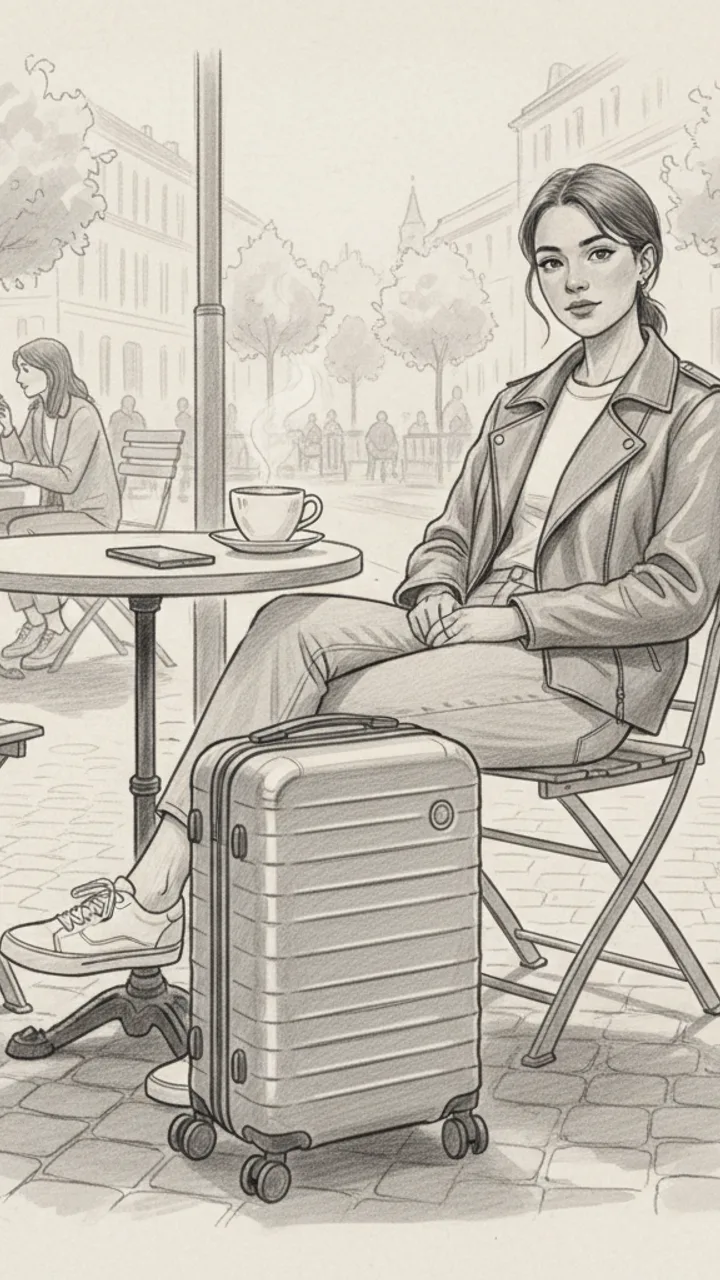
Payoff + CTA
0:30 - 0:38 · 8s
Visual: Creator sits at an outdoor café, coffee on the table, bag tucked neatly under the chair. Medium shot, slightly warm color grade. They glance at the camera naturally. Final frame freezes on the bag under the chair. Text overlay fades in: 'Range Travel Co. — link in bio'.
Audio: Budget travel does not have to mean bad gear. I'll link the bag below if you want to see the full breakdown.
Note: CTA is single and low-pressure. Freeze frame on bag gives a clean moment for any product tag sticker in post.
Generate yours to see all 4 scenes unlocked
Includes hook variations, AI judge scores, and storyboard sketches per scene.
Generate your script freeThe anatomy of a mid-length Reels retention curve
Translating brand briefs into platform-native dialogue
- Visual-first hooks that prioritize 'showing' over 'telling' in the first three seconds.
- Integrated proof beats where the product is used in a natural, non-demonstrative way.
- A single, focused Call to Action placed precisely at the 28-second mark to avoid early drop-off.
- Storyboard sketches that dictate camera angles, preventing the 'talking head' fatigue typical of low-quality UGC.
- Variable pacing options that allow for 'fast-cut' or 'cinematic' edits depending on the niche.
Why platform-agnostic scripting leads to underperformance
A script that ignores the visual 'safe zones' of the Instagram UI is a script that fails to convert, regardless of how good the hook is.
Handling non-linear narrative and edge-case briefs
Example hooks WeKlapp will generate
Common mistakes (and what to do instead)
✗ Using a 'Hey guys' intro that wastes the first two seconds of the hook.
→ Start mid-action with a visual tease or a specific statement that addresses a pain point immediately.
✗ Providing a CTA that asks for three different things at once.
→ Stick to one clear direction, like 'Check the link in bio' or 'Save this for later,' placed in the final five seconds.
✗ Over-scripting the product features so there is no room for natural reactions.
→ Limit spoken features to two per Reel and use text overlays for the technical details.
One Trouser, Three Outfits (Petite-Friendly Fit Note)
Hook: “These wide-leg trousers work for the office, dinner, and the weekend — and yes, I'm 5'2".”
Angle: A petite lifestyle creator proves wide-leg tailored trousers are a three-occasion staple, not just a tall-girl trend.
Hook
0:00 - 0:03 · 3s
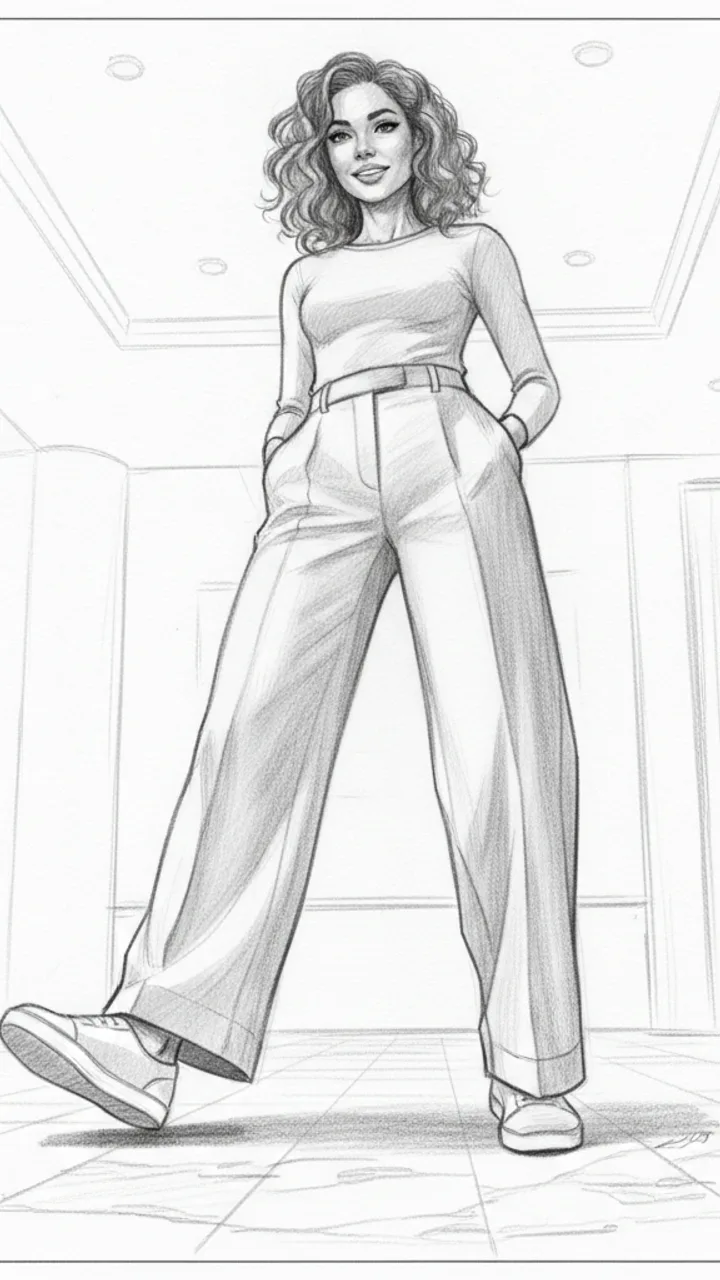
Visual: Close-up, low-angle shot starting at the hem of wide-leg trousers pooling slightly on the floor, slowly panning up to creator's confident face. Text overlay centred on screen: 'ONE TROUSER. THREE WAYS. (Petite girl approved.)'
Audio: These wide-leg trousers work for the office, dinner, and the weekend — and yes, I'm 5'2".
Note: Hook line doubles as thumbnail headline. Keep pan smooth and slow — the fabric drape is the visual sell.
Office Look
0:03 - 0:15 · 12s
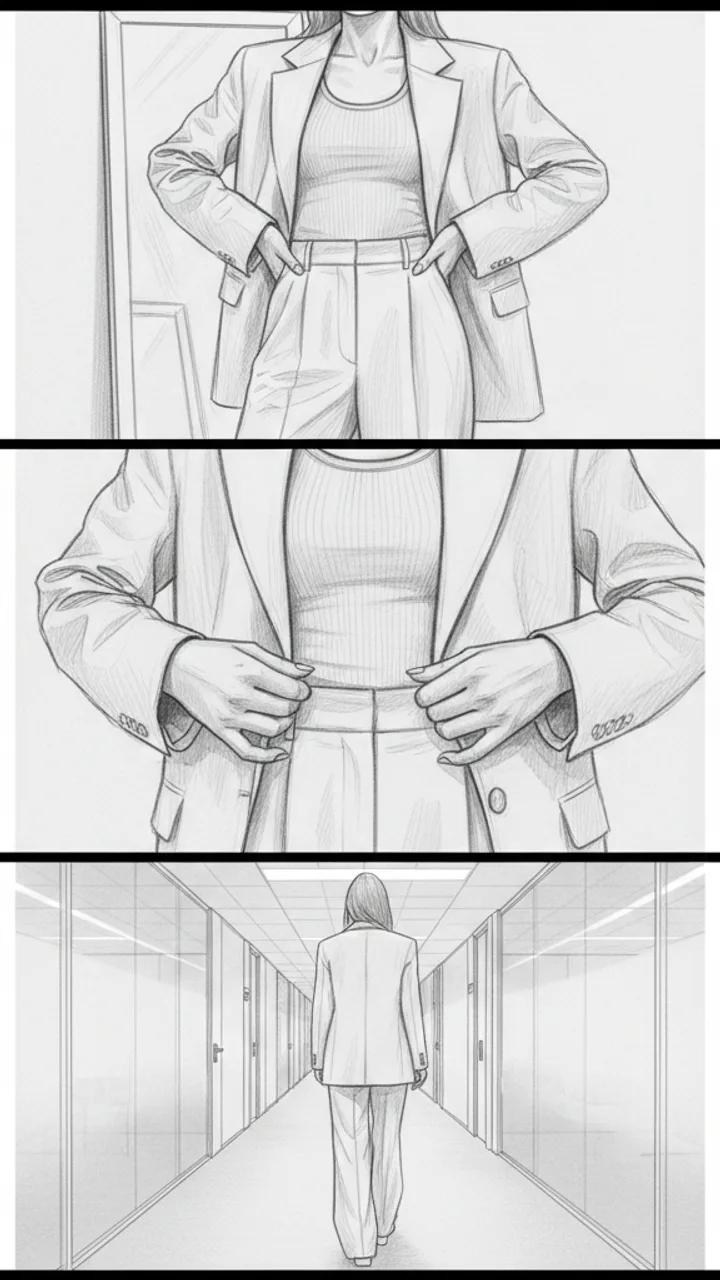
Visual: Three quick cuts: (1) Full-length mirror shot — trouser paired with a fitted ribbed tank tucked in and a structured blazer. (2) Hands adjusting blazer lapels. (3) Walking away from camera down a hallway. Text overlay top-left corner for each cut: 'Look 1: Office' then 'Mode District Wide-Leg Trouser'
Audio: For the office I'm keeping it clean — ribbed tank, blazer, pointed mules. The high waist does a lot of the work here. For me, the slightly cropped hem on the regular length actually hits perfectly at the ankle without alterations, which never happens.
Note: Mules are key — they visually lengthen the leg in the trouser. Natural light near a window preferred.
Dinner + Weekend Looks
0:15 - 0:30 · 15s
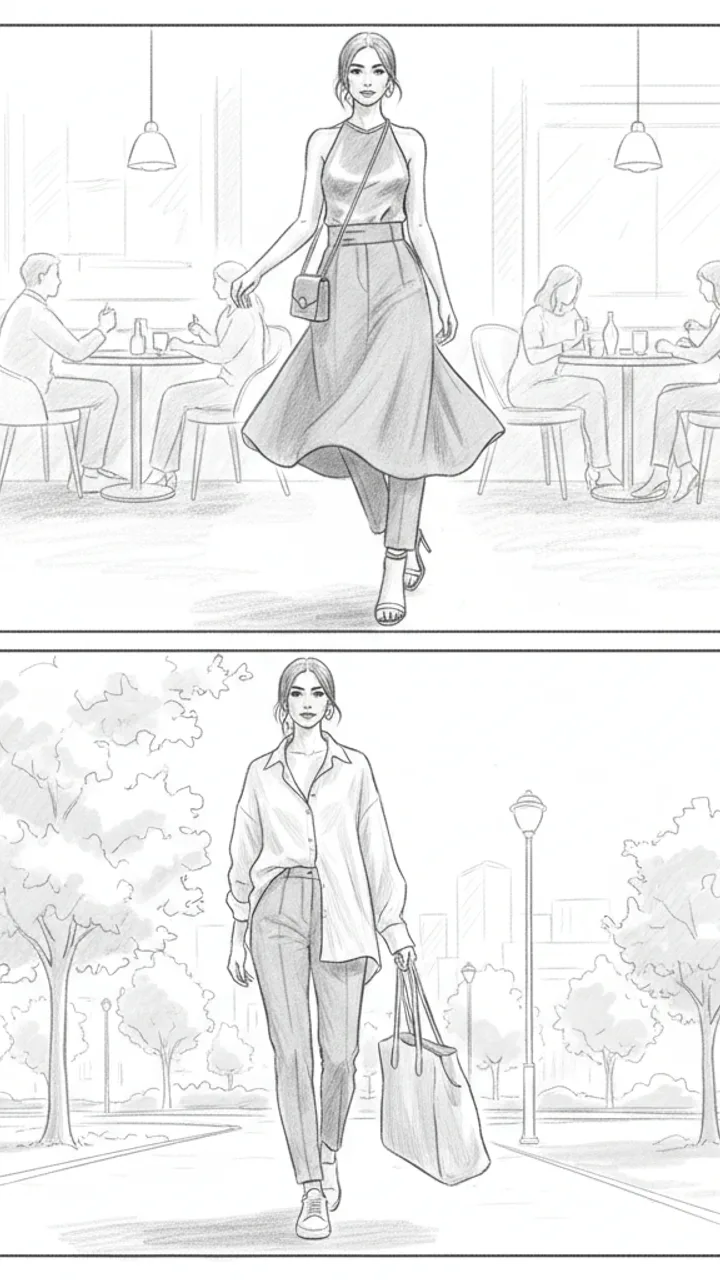
Visual: Split into two rapid mini-looks. Dinner: Creator spins into frame in a satin halter top tucked in, small shoulder bag, strappy heels — warm ambient restaurant-style lighting. Text overlay: 'Look 2: Dinner'. Weekend: Creator walks into frame in an oversized linen shirt half-tucked, white trainers, tote bag — bright outdoor natural light. Text overlay: 'Look 3: Weekend'
Audio: Dinner — swap the blazer for a satin halter and suddenly it's a whole different outfit. Weekend I go half-tuck, trainers, done. Same trouser, completely different energy each time. Link in bio if you want to try them.
Note: Keep transitions snappy — a single frame jump cut between looks. No fade. The contrast between looks is the payoff.
Generate yours to see all 3 scenes unlocked
Includes hook variations, AI judge scores, and storyboard sketches per scene.
Generate your script freeFrequently asked questions
How does the AI judge panel actually score the scripts?
The panel uses separate models trained on high-retention Reels data to evaluate scripts for hook strength, brand integration, and platform-specific tone. It looks for 'red flags' like overly corporate language or a lack of visual cues, giving you a score from 1-10 before you ever hit record.
Can it write scripts for different niches like tech or beauty?
Yes. By analyzing a creator's existing channel, the generator identifies the specific vocabulary and pacing used in that niche. A tech script will prioritize clarity and specs, while a beauty script will focus on texture, application shots, and lighting cues to match audience expectations.
Does it include instructions for the visual edit?
Every script includes a two-column layout: one for the spoken script and one for the visual storyboard. It suggests specific shots—like close-ups, wide angles, or POV shots—to ensure the creator knows exactly what to film to match the audio beats.
How do I handle a brand brief that is too long for a 30-second Reel?
The generator identifies the most 'engaging' points from a long brief and suggests what to keep for audio and what to relegate to the caption or text overlays. This prevents the script from feeling rushed while still satisfying the brand's legal and marketing requirements.
What if I need the script to be exactly 15 seconds or 60 seconds?
You can set a specific duration constraint. For 15 seconds, it will focus on a single punchy hook and a quick demo. For 60 seconds, it will build a more complex narrative with multiple proof beats and a deeper storytelling element.
Related script templates
Generate your first script in under a minute
Paste a channel link and a brand brief. WeKlapp handles the analysis, scriptwriting, judging, and storyboarding.
Start free