
Script Templates for Food Creators
A high-end cookware brand recently sent over a brief that demanded a 'lifestyle-forward' integration for a new enameled Dutch oven. The creator, a clinical recipe developer known for top-down technical precision, faced a common friction point: how to satisfy a brand's desire for aesthetic 'vibes' without alienating an audience that expects a masterclass in heat management. Brands usually look for the product to be pristine, but viewers trust the creator more when the pot shows a bit of fond at the bottom. WeKlapp handled this tension by analyzing the creator's last twenty videos to identify where their audience usually drops off. It recognized that for this specific creator, a scripted 'lifestyle' intro would feel fake. Instead, the tool drafted a script that opened with the aggressive sound of a sear, weaving the brand's talking points into the actual mechanics of the recipe rather than a standalone pitch.
Built for food creators with any audience size
Brief intake from PDF or plain text
Multiple script variations per brief
AI judge panel + scene-by-scene revisions
25-Minute Dinner That My Kids Actually Finished
Hook: “This one pan saved my Tuesday.”
Angle: A busy mom gives an unfiltered, real-time verdict on a Pantry Box weeknight kit — from box to plate in under 25 minutes, with kids as the ultimate judges.
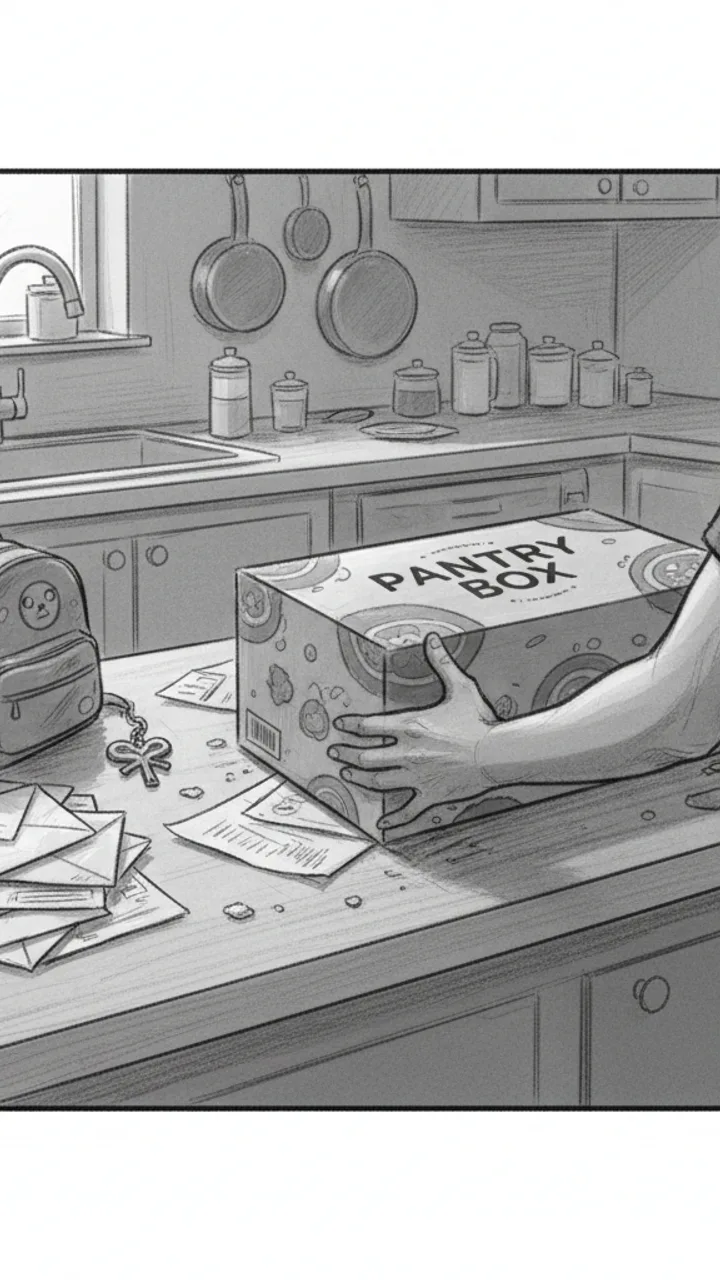
Hook
0:00 - 0:03 · 3s
Visual: Tight over-the-shoulder shot of a cluttered kitchen counter. Creator slaps a Pantry Box kit down next to a pile of unopened mail and a kid's backpack. Text overlay center screen: 'THIS ONE PAN SAVED MY TUESDAY'
Audio: This one pan saved my Tuesday.
Note: Hook line doubles as thumbnail headline. Keep it fast — no music intro, just ambient kitchen noise then voice.
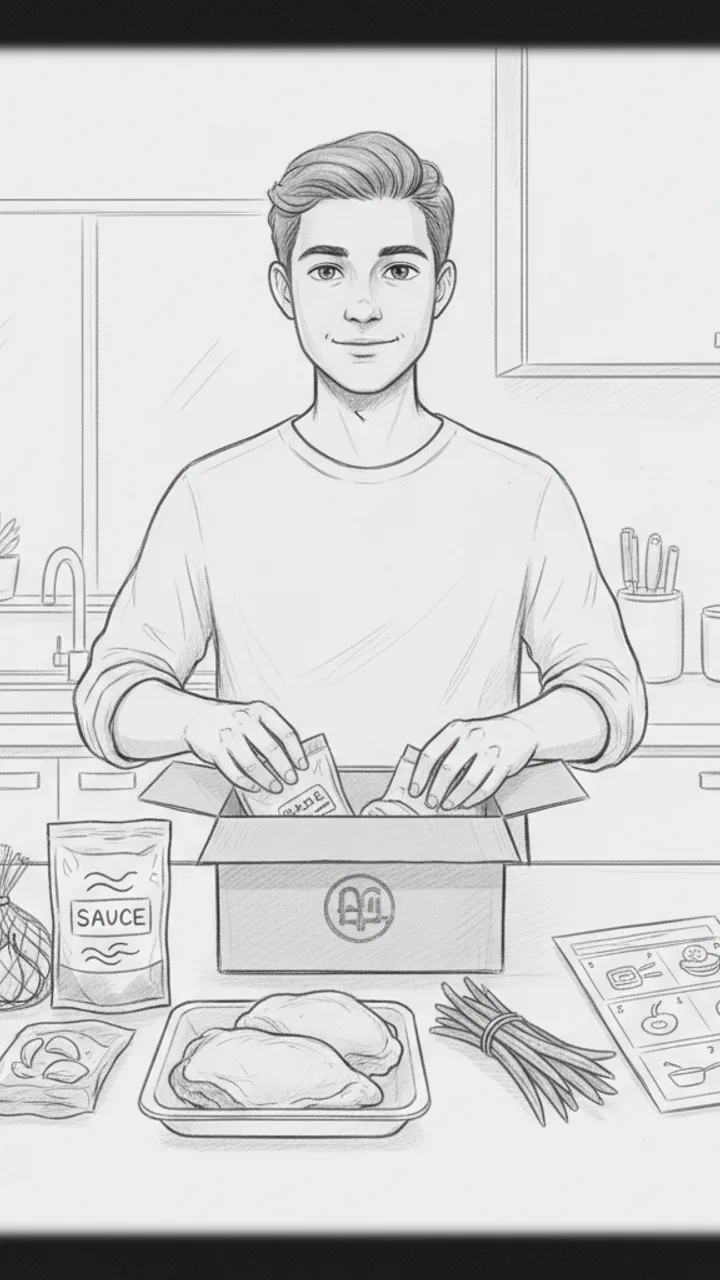
Unbox + Honest Setup
0:03 - 0:15 · 12s
Visual: Medium shot, creator facing camera at counter, pulling ingredients out of the Pantry Box kit one by one — pre-portioned garlic, a sauce packet, chicken thighs, green beans. Quick cut to close-up of the instruction card. Text overlay bottom of screen: 'Pantry Box honey garlic chicken kit'
Audio: Okay so I've tried maybe six of these kits now and honestly? Some of them are a lot of chopping dressed up as convenience. This one though — garlic's already minced, sauce is pre-made, and everything fits in one pan. I'm a little suspicious it's going to be good.
Note: Keep the skeptical tone genuine. Do not oversell. The 'suspicious it's going to be good' line builds authentic tension.
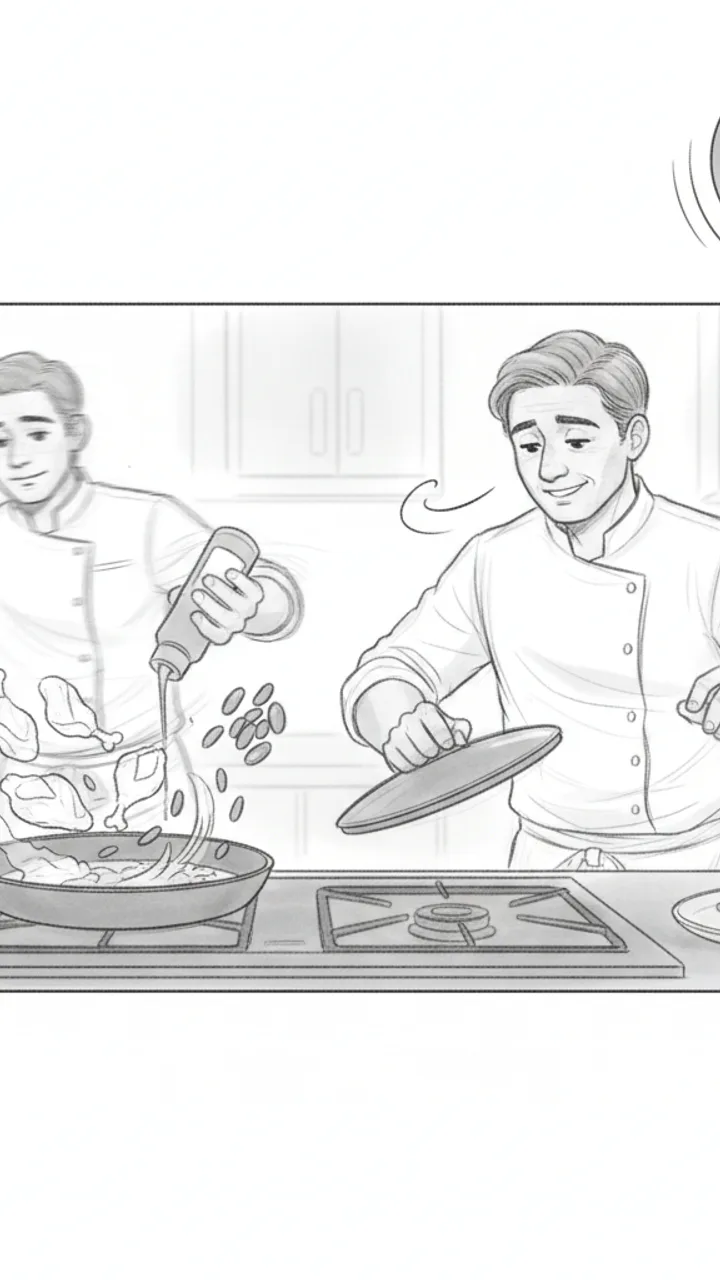
The Cook
0:15 - 0:30 · 15s
Visual: Sped-up wide shot of creator cooking — chicken going into the pan, sauce being poured, green beans added to the same pan. Clock graphic in corner ticking up to 22 minutes. Cut to creator lifting the lid and leaning in to smell it. Text overlay: '22 minutes. One pan. No disasters.'
Audio: I started this at 6:08. It's 6:30 and my kitchen smells like a restaurant, which — for a Tuesday — I'll take. One pan, one wipe-down, done.
Note: Use real timestamps if possible for authenticity. The sped-up cook with a real clock builds credibility without fabricating a claim.
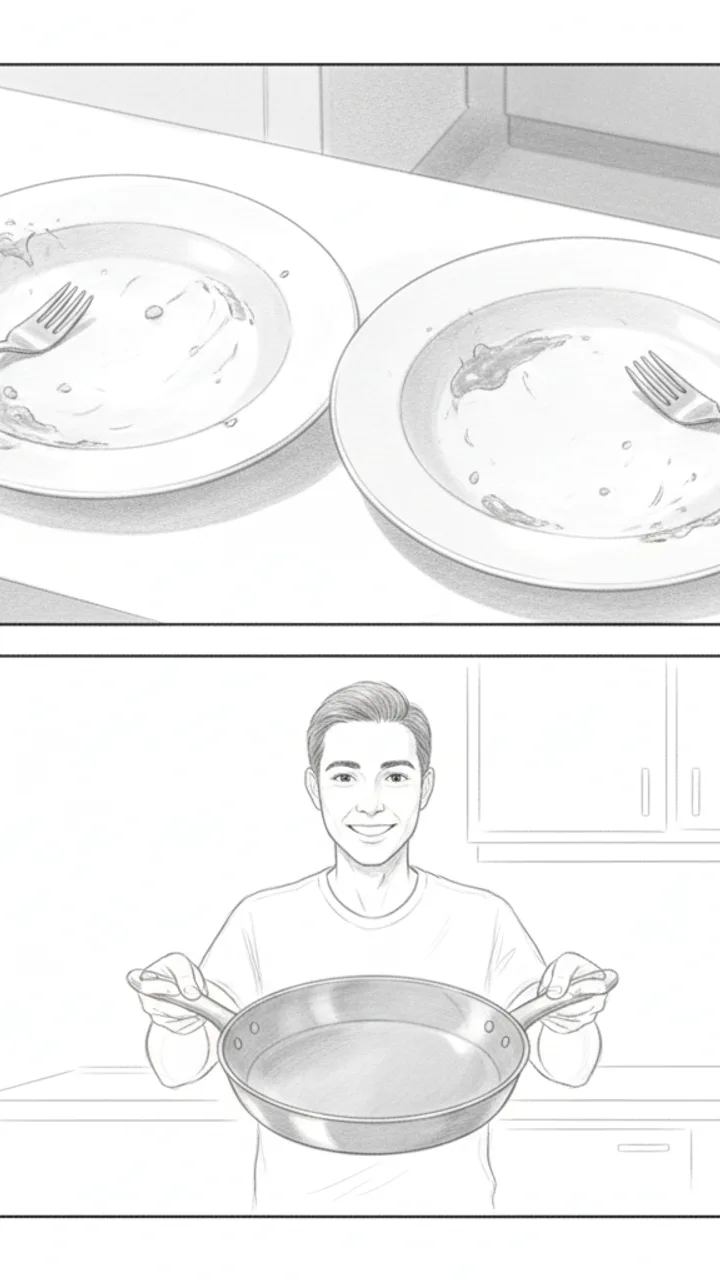
Kid Verdict + CTA
0:30 - 0:42 · 12s
Visual: Handheld close-up of two kids' plates — both mostly empty. Pan to creator holding up the empty pan toward camera with a shrug and a grin. Text overlay: 'Empty plates = mom win' then fade to: 'Link in bio — first box discount'
Audio: Both kids ate it. My seven-year-old asked if we could have it again, which is the only review that actually matters in this house. Not every kit lands like this one did — but for me, this is the one I'd reorder. Link in bio if you want to try it.
Note: CTA is soft and personal. Avoid superlatives. The 'not every kit lands' callback to scene 2 keeps the honest framing intact through the end.
Generate yours to see all 4 scenes unlocked
Includes hook variations, AI judge scores, and storyboard sketches per scene.
Generate your script freeTechnical accuracy versus the brand’s marketing wishlist
Evaluating the script variations for retention and flow
- Script variation one focused on the unboxing, which we cut to avoid the 'ad-like' feel.
- Script variation two integrated the brand's 'even heating' claim into the middle of a browning shot.
- Script variation three attempted a comedic angle that didn't fit the creator’s serious instructional tone.
- The AI panel scored the second variation highest for 'audience sentiment alignment' based on historical comment data.
- We shortened the mid-roll talking point from twelve seconds to five to maintain the cooking rhythm.
Storyboard logic and the macro-shot trade-off
A successful food script treats the product as an essential ingredient, not just a decorative background piece.
Where the human chef overrules the algorithm
Example hooks WeKlapp will generate
Common mistakes (and what to do instead)
✗ Opening the video with 'Thanks to [Brand] for sponsoring this video.'
→ Start with a high-sensory cooking sound or a visual result, then weave the sponsorship into the first transition.
✗ Using generic marketing adjectives like 'revolutionary' or 'innovative' in a recipe.
→ Replace fluff with sensory verbs—describe how the product changes the texture, color, or speed of the cook.
✗ Including a static shot of the product packaging for more than two seconds.
→ Show the product in motion; a clip of it being used is worth more to a brand than a still shot of a box.
Ice Still Rattling After 8 Hours in a Hot Car
Hook: “I left this in my car all day — it was 94 degrees outside.”
Angle: Real-world heat stress test proves insulation claim through three sequential proof shots with no staging.
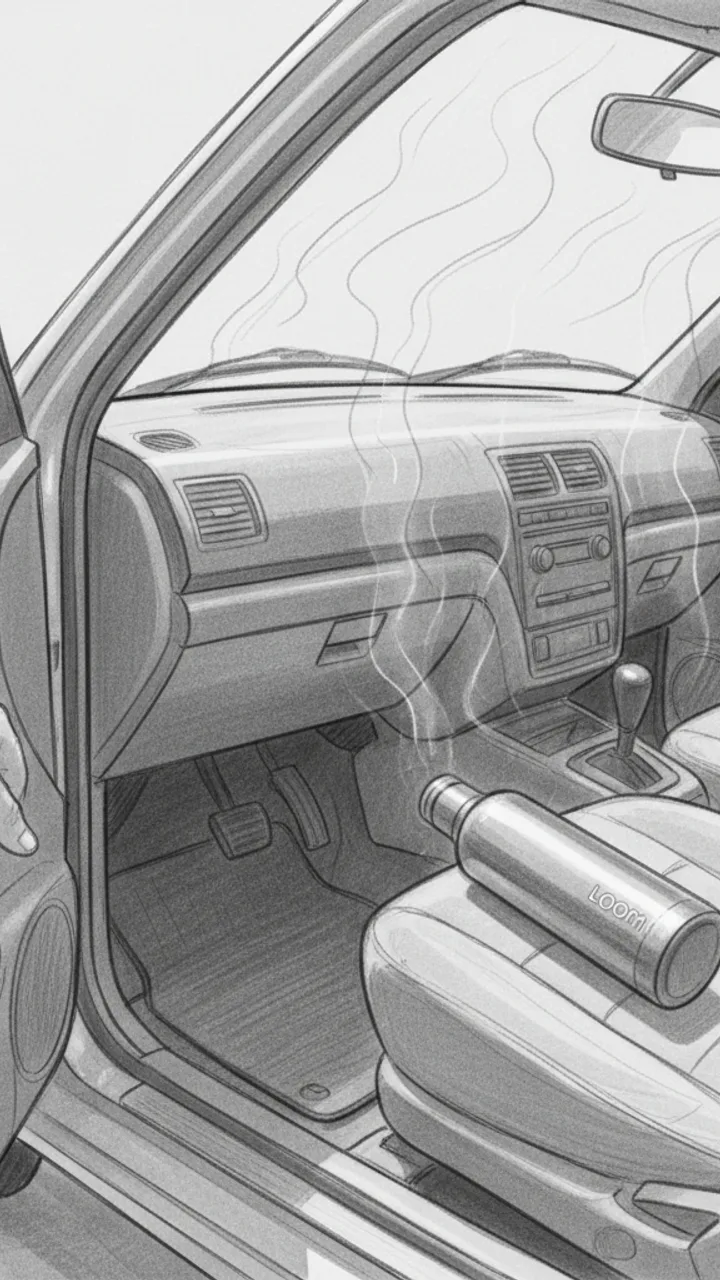
Hook — Hot Car Reveal
0:00 - 0:08 · 8s
Visual: POV handheld shot opening a sun-baked car door, heat shimmer visible. Creator reaches in and grabs the Loom Bottle off the passenger seat. Text overlay in bold white: 'LEFT IN A 94° CAR ALL DAY'
Audio: I left this in my car all day — it was 94 degrees outside. Dashboard was hot to the touch. Let's see what's inside.
Note: Shoot mid-afternoon for real heat shimmer. Keep the grab motion quick and confident — no hesitation.
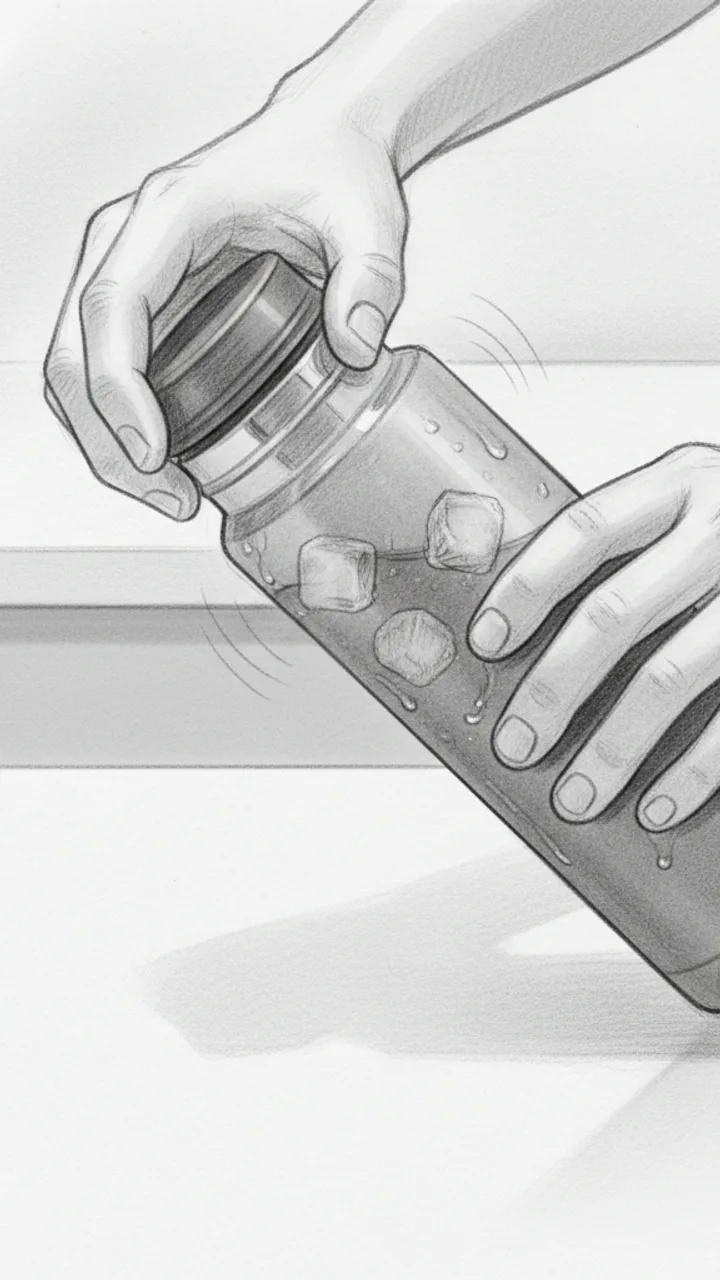
Proof Shot 1 — The Open
0:08 - 0:20 · 12s
Visual: Close-up shot of creator unscrewing the lid over a white countertop. Steam condensation visible on the outside of the bottle. Ice cubes audibly rattle as the lid comes off. Creator tilts bottle so ice is visible on camera. Text overlay: 'STILL ICE. 8 HOURS LATER.'
Audio: Eight hours later — listen to that. Full ice. In my testing I've never had it melt down this fast, but today was a real push and it held. You can see the condensation on the outside — that's how cold it still is in there.
Note: Capture the rattle sound clearly — this is the money audio moment. Use a lavalier mic or get the phone close to the bottle mouth.
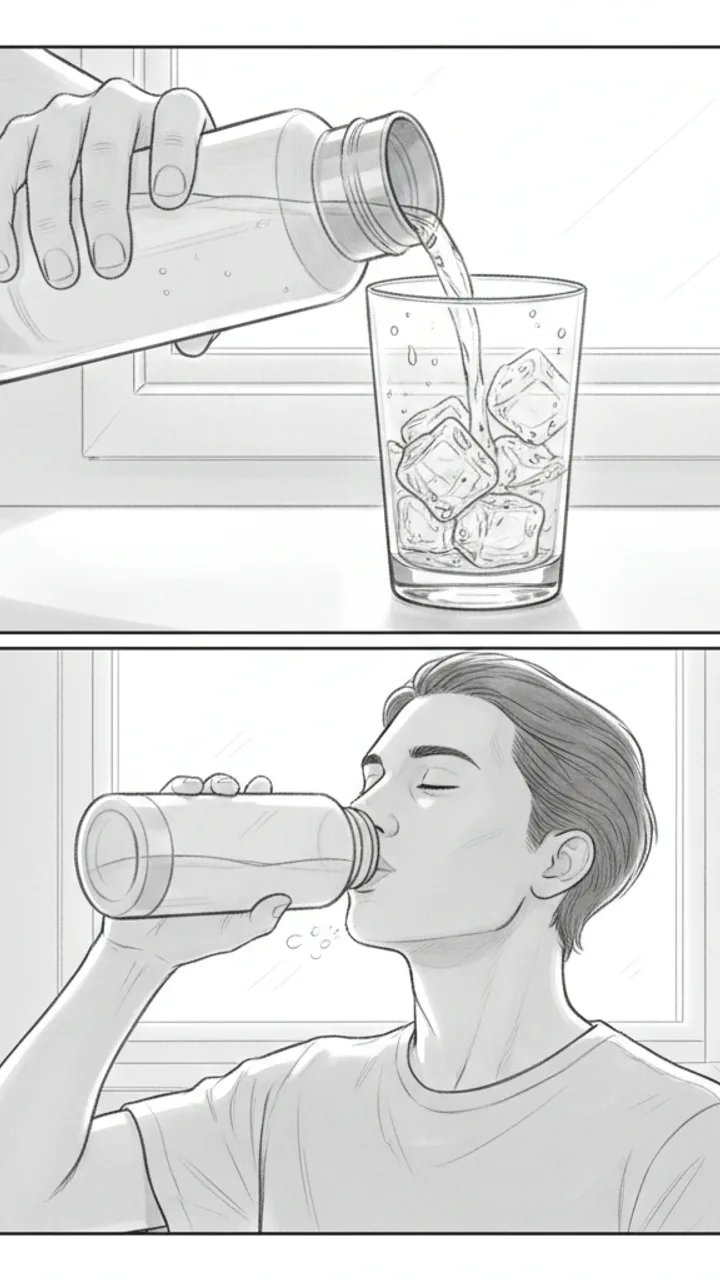
Proof Shot 2 and 3 — Pour and Taste
0:20 - 0:35 · 15s
Visual: Shot 1: Creator pours water over a clear glass — ice tumbles out, water is visibly cold with condensation forming on the glass instantly. Text overlay: 'COLD WATER. NOT LUKEWARM.' Shot 2: Creator takes a sip straight from the bottle, genuine reaction, slight exhale of relief. Text overlay: 'ACTUALLY COLD.'
Audio: That pour is cold — not just cool, actually cold. And drinking straight from it after sitting in a hot car? That's the whole point of the Loom Bottle for me. Link in bio if you want one — they go fast.
Note: The sip reaction needs to feel real. Do a genuine take, not performed surprise. The glass pour shot gives visual proof the ice survived — don't skip it.
Generate yours to see all 3 scenes unlocked
Includes hook variations, AI judge scores, and storyboard sketches per scene.
Generate your script freeFrequently asked questions
How does the script generator handle different dietary niches?
The tool analyzes your past content to learn your specific terminology, whether you're vegan, keto, or gluten-free. It won't suggest 'searing a steak' if your profile is strictly plant-based. It uses your historical vocabulary to ensure the brand's requirements are translated into your specific culinary language.
Can I set a specific time limit for the brand integration beat?
Yes. You can input the brand’s required 'on-screen time' for the product. WeKlapp then calculates the best placement within the script to ensure you hit that contractual obligation without ruining the video's pacing or causing a massive drop-off in viewer retention.
Does the script include technical camera cues for food shots?
It provides storyboard sketches and text cues for common food angles like top-down, 45-degree macro, and the 'pour shot.' These are tailored to the type of food being prepared, ensuring the lighting and angle suggestions make the dish look appetizing.
What if the brand brief is vague and lacks specific talking points?
WeKlapp uses its AI panel to 'interrogate' the brand's website and previous successful campaigns. It generates potential talking points that fit the brand's identity, which you can then approve or edit, helping you provide a professional structure even when the brief is thin.
Can I export the script to other formats besides Word?
The primary export is a formatted Word document designed to be easily shared with brand managers for approval. It includes the script, timecodes, and storyboard frames in a clean layout that looks professional and reduces the back-and-forth during the review process.
Related script templates
Generate your first script in under a minute
Paste a channel link and a brand brief. WeKlapp handles the analysis, scriptwriting, judging, and storyboarding.
Start free