
Mental Health TikTok Script Generator
A therapist sits in a dimly lit office, leaning toward the lens. There is no greeting. They exhale, eyes tracking something off-camera, and wait exactly 1.5 seconds before speaking. That silence is the hook. It mimics the clinical pause of a real session, signaling to the viewer’s nervous system that the scrolling chaos has stopped. By the time the first caption hits the screen, the audience is already co-regulating. This specific pacing—the 'clinical beat'—is why mental health creators often struggle with generic AI tools. Most generators spit out high-energy hype scripts that feel like a car commercial, completely misreading the vulnerability required for a 45-second clip on trauma responses or burnout. WeKlapp is built to recognize these nuance patterns. It doesn't just write dialogue; it maps out the heavy pauses, the soft-focus cutaways, and the specific shot-reverse-shot sequences that allow a creator to maintain professional authority while remaining accessible on a FYP.
Trained on what works in the mental health corner of TikTok
Hook variations tuned to the first 2 seconds of attention
Brand-fit angles vetted by an AI judge panel
Scene-by-scene storyboards you can revise in one click
I Added One Thing To My Morning Routine
Hook: “This is the only thing I don't skip.”
Angle: A quiet, unhurried peek into a real morning habit — no performance, just the ritual itself doing the talking.
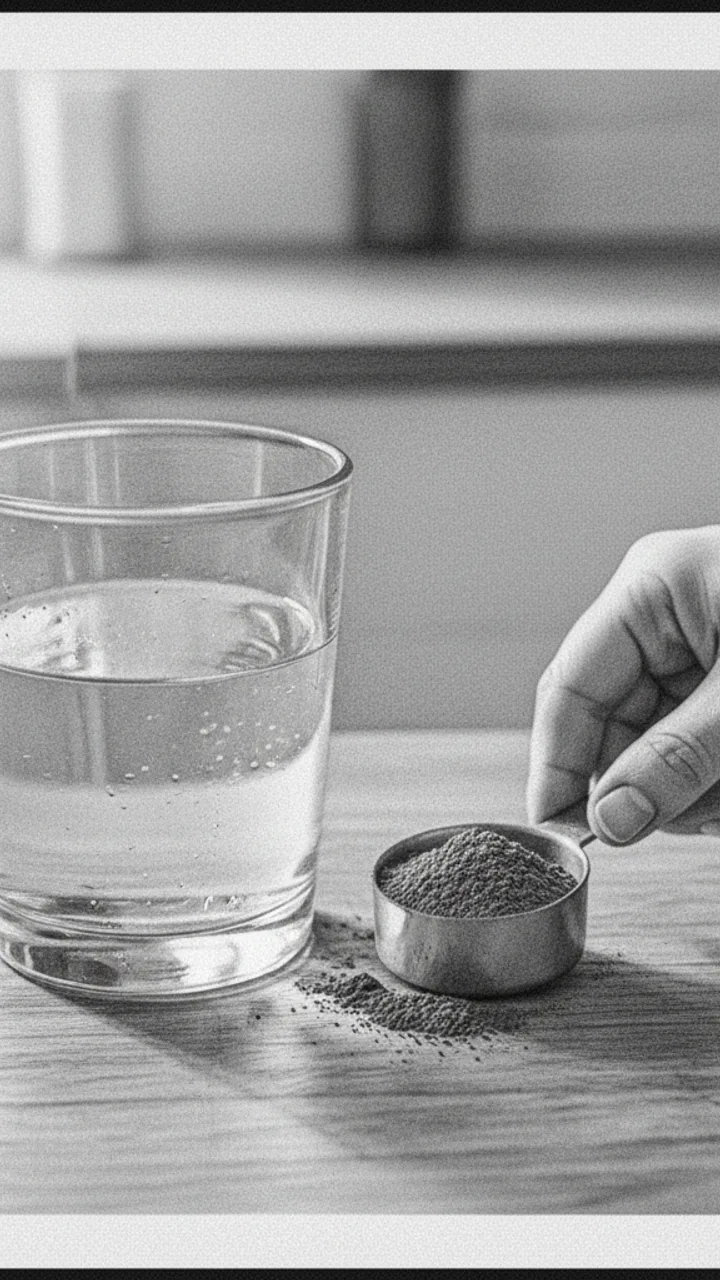
Hook
0:00 - 0:03 · 3s
Visual: Extreme close-up, handheld, slightly warm morning light. A clear glass of water sits on a wooden countertop. A hand reaches in and sets a small scoop of green powder beside it. Text overlay centered: 'The one thing I don't skip.'
Audio: This is the only thing I don't skip.
Note: No music yet — let ambient kitchen sound breathe. The stillness is the hook.
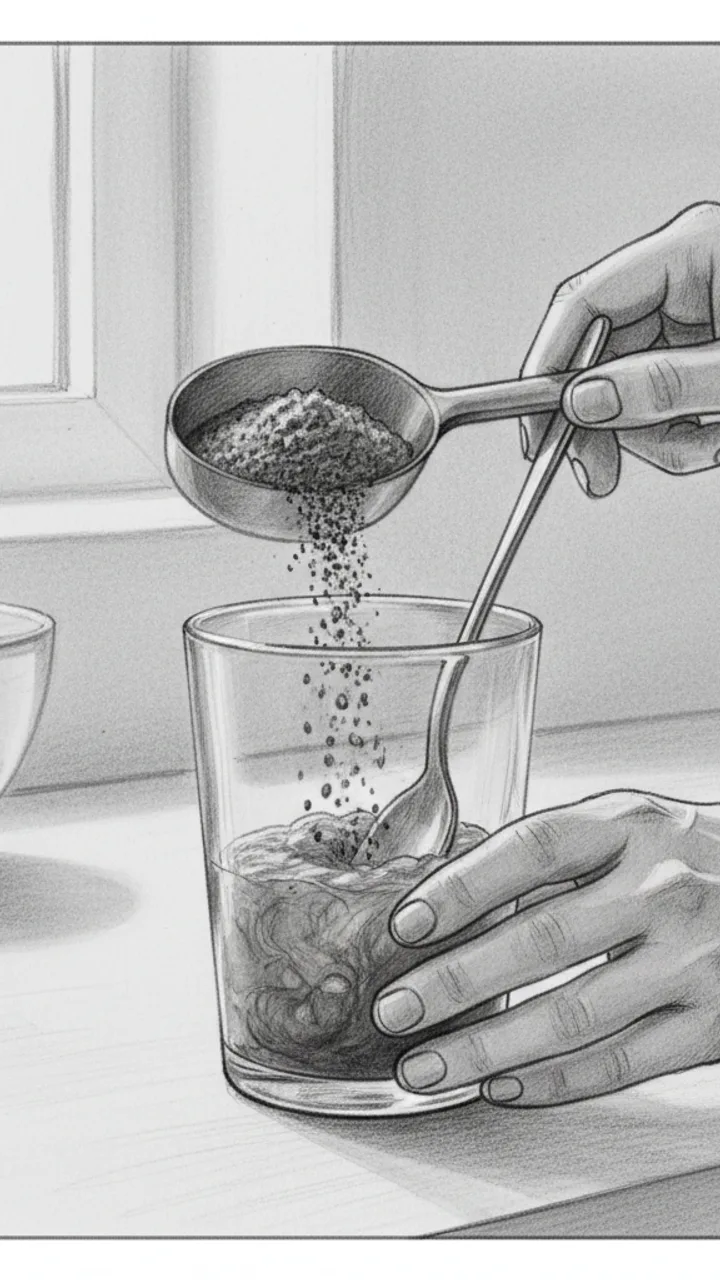
The Ritual
0:03 - 0:15 · 12s
Visual: Medium shot, camera resting low on the counter. Creator pours the scoop of Daily Greens Co. powder into the glass, stirs slowly with a long spoon. Real clumps dissolving, real color. No jump cuts — one continuous slow take. No text overlay.
Audio: Before coffee, before anything else — I mix this in. For me, starting the morning this way just feels like I'm setting a tone. My digestion tends to feel more settled when I'm consistent with it, and I notice I'm not reaching for a second coffee by ten.
Note: Keep the pour and stir in full — the realness of it is the content. No speed ramp.
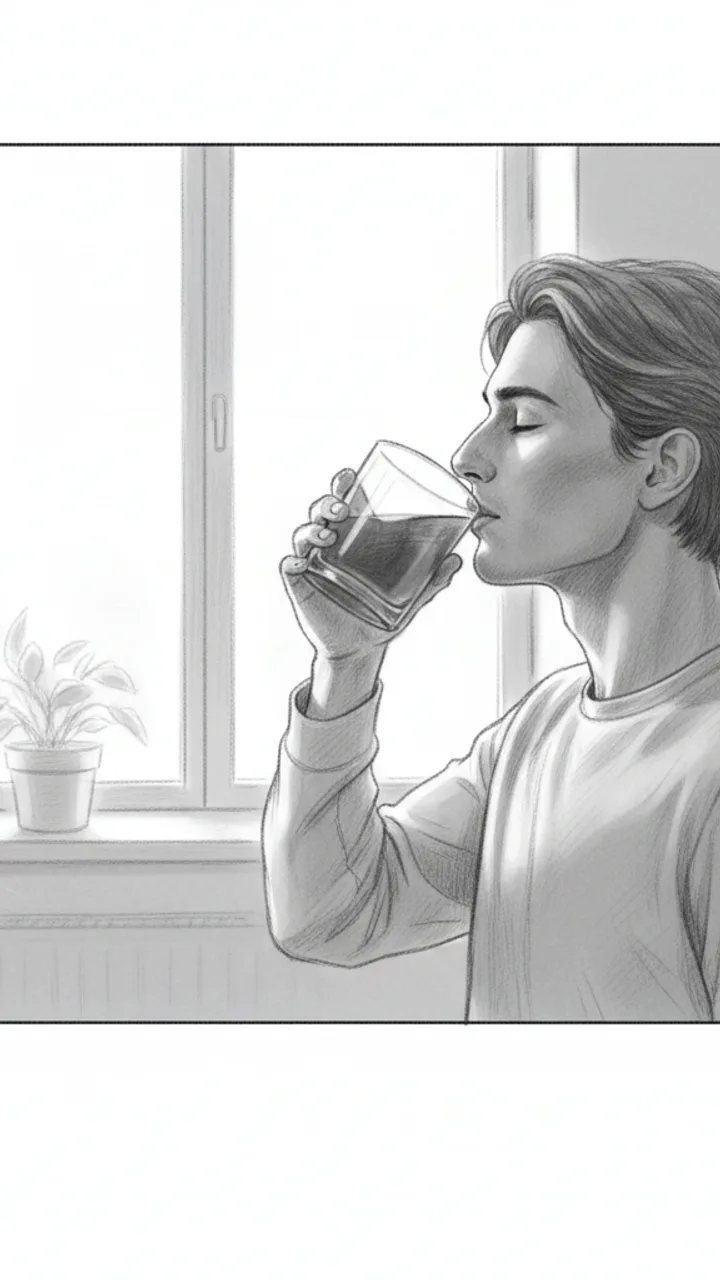
The Moment
0:15 - 0:28 · 13s
Visual: Creator lifts the glass and walks toward a window with soft natural light. Over-the-shoulder shot transitioning to a side profile as they take a slow sip. Text overlay fades in bottom-left: 'Daily Greens Co.' — small, clean, no logo animation.
Audio: It's not magic. It's just a small, repeatable thing that fits where I already am. That's really all a good habit needs to be.
Note: The brand name appears on screen here — no verbal callout needed. Let the visual do the work.
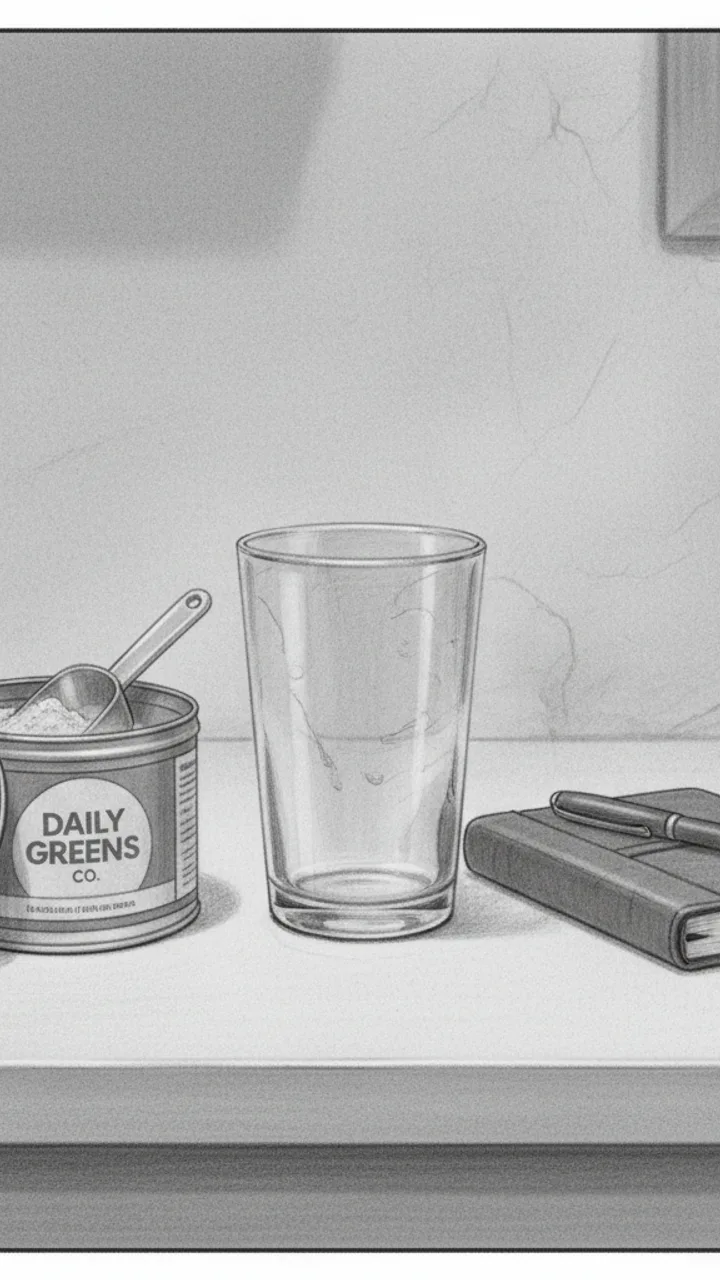
Soft CTA
0:28 - 0:35 · 7s
Visual: Cut back to the countertop. The now-empty glass, the open tin of Daily Greens Co. powder, and a journal beside it — unhurried still life. Text overlay centered: 'Link in bio if you want to try it.' Fade to white.
Audio: If you're curious, I'll leave a link. No pressure — just sharing what's in my rotation.
Note: End on stillness, not urgency. The fade to white reinforces the calm, morning-light tone.
Generate yours to see all 4 scenes unlocked
Includes hook variations, AI judge scores, and storyboard sketches per scene.
Generate your script freeThe anatomy of the 'Third-Person' somatic sequence
Bridging the gap between brand briefs and clinical ethics
- On-screen action notes for b-roll of grounding objects like weighted blankets or fidget toys.
- Specific timecodes for when to transition from a handheld 'vlog' feel to a stable tripod 'expert' shot.
- AI-scored variations that rank which script best balances brand requirements with your natural pacing.
- Storyboard sketches that suggest where to place text overlays so they don't cover the 'safe space' of the frame.
- Direct export to Word for final clinical review before you ever hit record.
The production constraint even seasoned therapists overlook
A script is only as good as the creator's ability to breathe through the lines without looking like they are reading a teleprompter.
Example hooks WeKlapp will generate
Common mistakes (and what to do instead)
✗ Using overly clinical jargon (e.g., 'neuroplasticity') in the first three seconds.
→ Start with the felt sensation or the common symptom, then introduce the clinical term at the 15-second mark.
✗ Filming the entire script in one continuous take with no visual shifts.
→ Use a 'jump cut' every 4-6 seconds or shift the camera angle slightly to keep the visual cortex engaged.
✗ Placing the brand name in the hook of a sponsored video.
→ Focus on the pain point first; introduce the brand as the bridge to the solution in the middle third of the video.
✗ Ignoring the 'safe zone' for captions, resulting in text being covered by the UI.
→ Keep all vital text in the center-left 'sweet spot' and use the generator's storyboard to check placement.
Ice Still Rattling After 8 Hours in a Hot Car
Hook: “I left this in my car all day — it was 94 degrees outside.”
Angle: Real-world heat stress test proves insulation claim through three sequential proof shots with no staging.
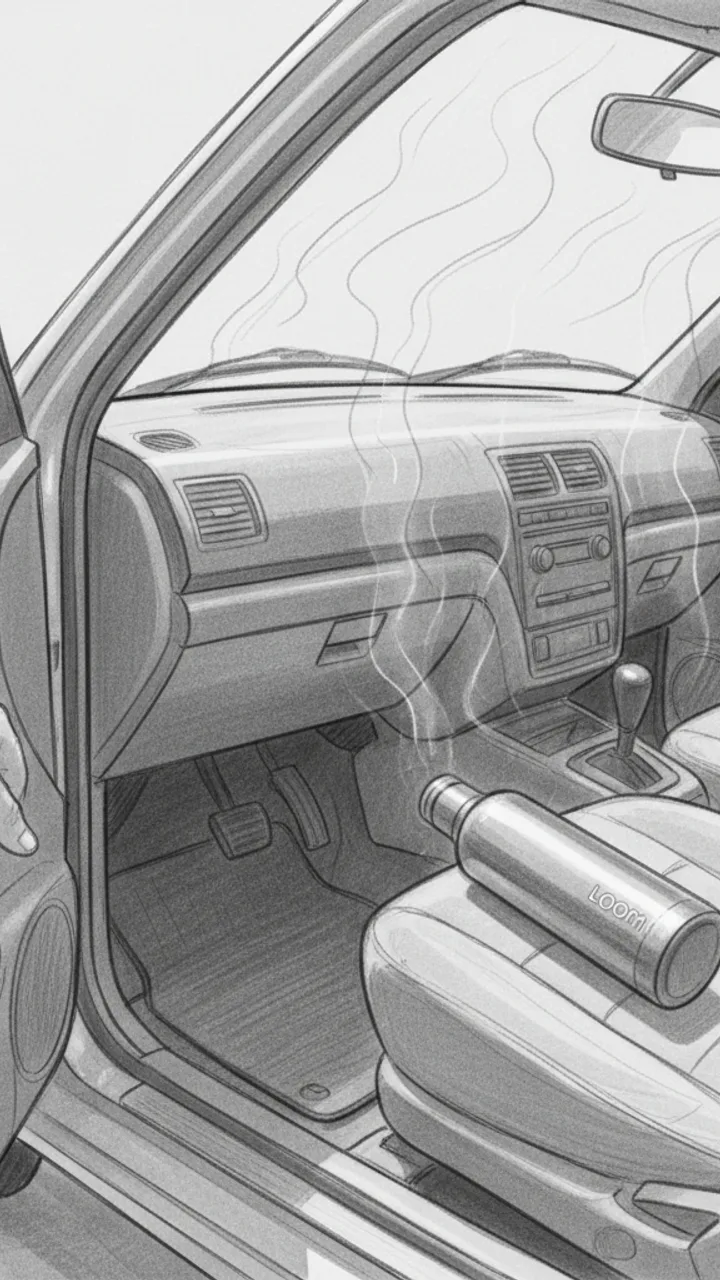
Hook — Hot Car Reveal
0:00 - 0:08 · 8s
Visual: POV handheld shot opening a sun-baked car door, heat shimmer visible. Creator reaches in and grabs the Loom Bottle off the passenger seat. Text overlay in bold white: 'LEFT IN A 94° CAR ALL DAY'
Audio: I left this in my car all day — it was 94 degrees outside. Dashboard was hot to the touch. Let's see what's inside.
Note: Shoot mid-afternoon for real heat shimmer. Keep the grab motion quick and confident — no hesitation.
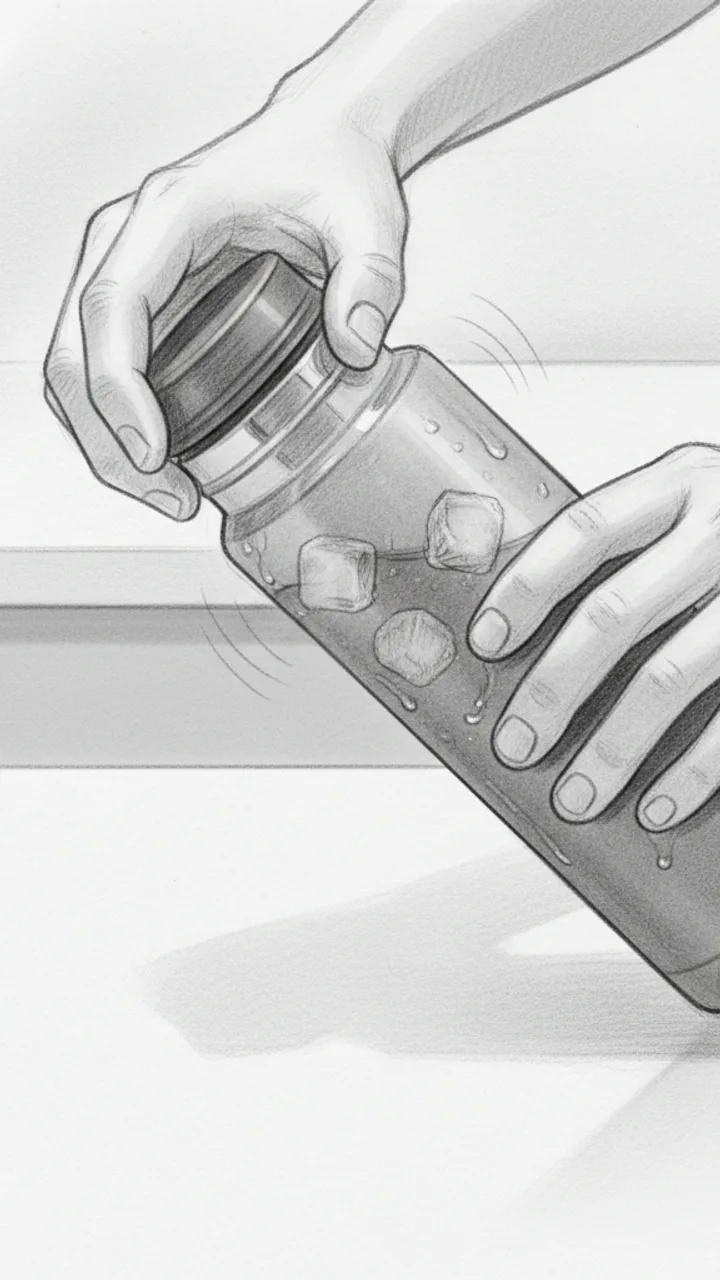
Proof Shot 1 — The Open
0:08 - 0:20 · 12s
Visual: Close-up shot of creator unscrewing the lid over a white countertop. Steam condensation visible on the outside of the bottle. Ice cubes audibly rattle as the lid comes off. Creator tilts bottle so ice is visible on camera. Text overlay: 'STILL ICE. 8 HOURS LATER.'
Audio: Eight hours later — listen to that. Full ice. In my testing I've never had it melt down this fast, but today was a real push and it held. You can see the condensation on the outside — that's how cold it still is in there.
Note: Capture the rattle sound clearly — this is the money audio moment. Use a lavalier mic or get the phone close to the bottle mouth.
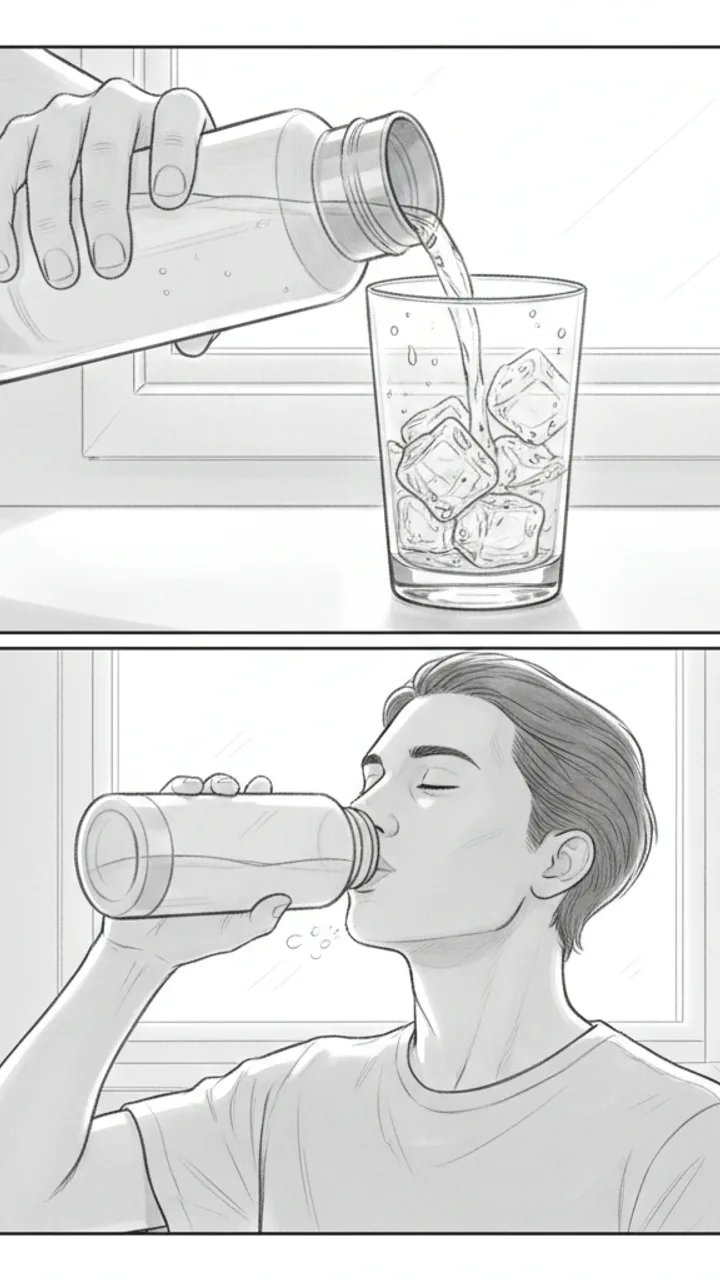
Proof Shot 2 and 3 — Pour and Taste
0:20 - 0:35 · 15s
Visual: Shot 1: Creator pours water over a clear glass — ice tumbles out, water is visibly cold with condensation forming on the glass instantly. Text overlay: 'COLD WATER. NOT LUKEWARM.' Shot 2: Creator takes a sip straight from the bottle, genuine reaction, slight exhale of relief. Text overlay: 'ACTUALLY COLD.'
Audio: That pour is cold — not just cool, actually cold. And drinking straight from it after sitting in a hot car? That's the whole point of the Loom Bottle for me. Link in bio if you want one — they go fast.
Note: The sip reaction needs to feel real. Do a genuine take, not performed surprise. The glass pour shot gives visual proof the ice survived — don't skip it.
Generate yours to see all 3 scenes unlocked
Includes hook variations, AI judge scores, and storyboard sketches per scene.
Generate your script freeFrequently asked questions
Can the AI handle my specific clinical niche like EMDR or IFS?
Yes. By uploading your previous scripts or a PDF describing your specific modality, WeKlapp learns the vocabulary and core tenets of your practice. It won't suggest broad 'life coach' advice if your input is grounded in Internal Family Systems or trauma-informed care.
How does it handle brand briefs from companies like BetterHelp?
You can paste the brief text or upload the PDF directly. The AI analyzes the mandatory talking points and legal disclaimers, then weaves them into your natural script structure so the transition doesn't feel jarring to your regular audience.
Is the content safe for my professional license?
The generator produces drafts, not final medical advice. Because WeKlapp provides per-scene storyboards and exports to Word, you have a clear workflow to review every claim and disclaimer for ethical compliance before you film.
Does it suggest what b-roll I should use?
Every script includes a 'Visuals' column. For mental health content, this often includes suggestions for 'lifestyle' b-roll—like making tea or adjusting a pillow—to soften the delivery of heavy or complex psychological topics.
What if the AI makes the script sound too robotic?
WeKlapp uses an 'AI Judge' panel that specifically scores the output for 'Human Flow.' If a script reads like a textbook, the judge flags it for a rewrite to ensure the pacing matches the conversational style required for TikTok.
Can I use it for long-form YouTube content too?
While this specific tool is optimized for the vertical, fast-paced nature of TikTok and Reels, the storyboard and script can be used as a structural foundation for longer videos, though you would likely need to expand the middle 'educational' beat.
Related script templates
Generate your first script in under a minute
Paste a channel link and a brand brief. WeKlapp handles the analysis, scriptwriting, judging, and storyboarding.
Start free