
Script Templates for Tech Reviewers
A top-tier laptop review doesn't start with a spec sheet; it starts with a macro shot of a hinge or the tactile click of a mechanical keyboard. The camera lingers for exactly 1.8 seconds before the creator mentions the silicon. This pacing is a deliberate defense against the immediate bounce. In the tech niche, the friction between a brand’s desire for 'feature-first' messaging and the audience’s demand for 'flaw-first' honesty is where most scripts fail. If the script sounds like a press release, you lose the research-driven viewer who came for benchmarks, not a commercial. WeKlapp builds tech scripts by analyzing the specific cadence of your previous benchmarks and A/B tests. It ensures the brand integration happens during a high-retention 'stress test' sequence rather than a dry talking-head segment, protecting your credibility while satisfying the brief’s mandatory callouts.
Built for tech reviewers with any audience size
Brief intake from PDF or plain text
Multiple script variations per brief
AI judge panel + scene-by-scene revisions
One Charger Replaced All Four on My Desk
Hook: “Four chargers on my desk — now it's one.”
Angle: A real desk teardown showing how a single 100W GaN brick eliminates cable chaos without sacrificing wattage per port.
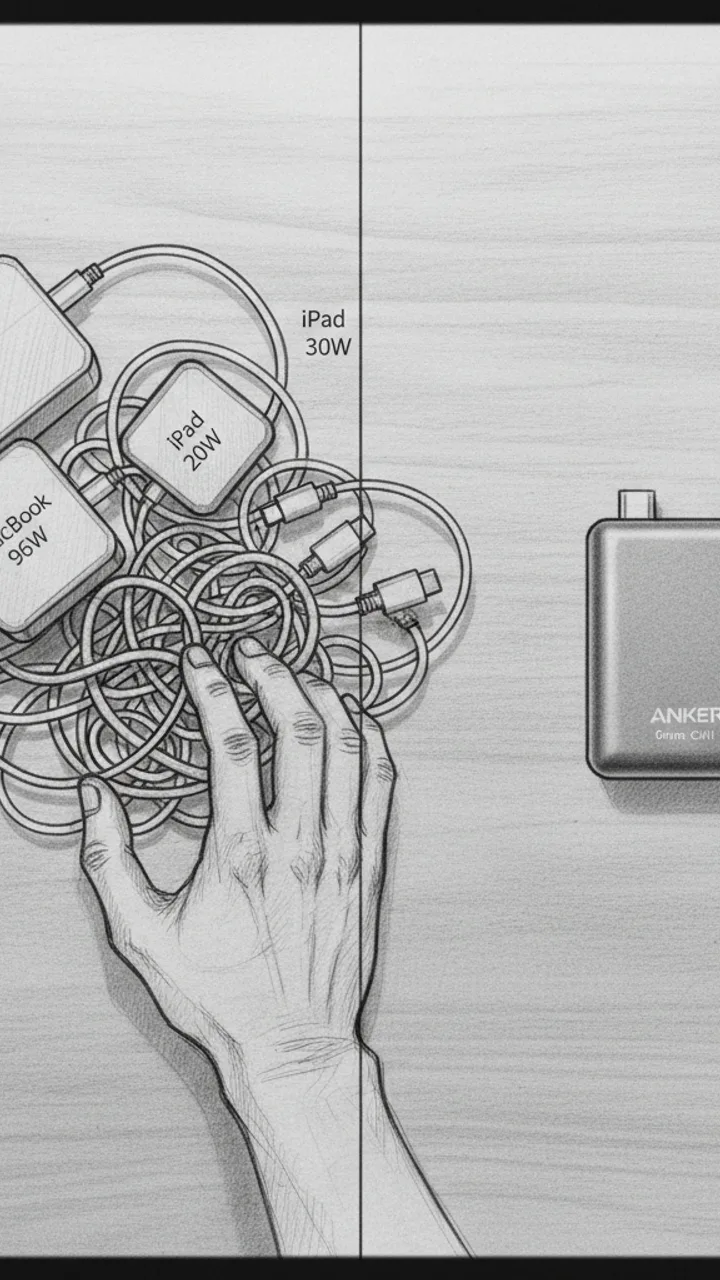
Hook
0:00 - 0:05 · 5s
Visual: Overhead flat-lay shot of a cluttered desk corner: four separate charger bricks tangled with cables — MacBook 96W, iPad 20W, phone 30W, earbuds 5W. Hand sweeps them into a pile. Cut to single Anker Prime unit sitting clean on the same corner. Text overlay: '4 CHARGERS → 1'
Audio: Four chargers on my desk — now it's one. This is the Anker Prime 100W GaN, and it actually pulls it off.
Note: Shoot the before state first with real gear, no staging. The contrast needs to feel honest, not art-directed.
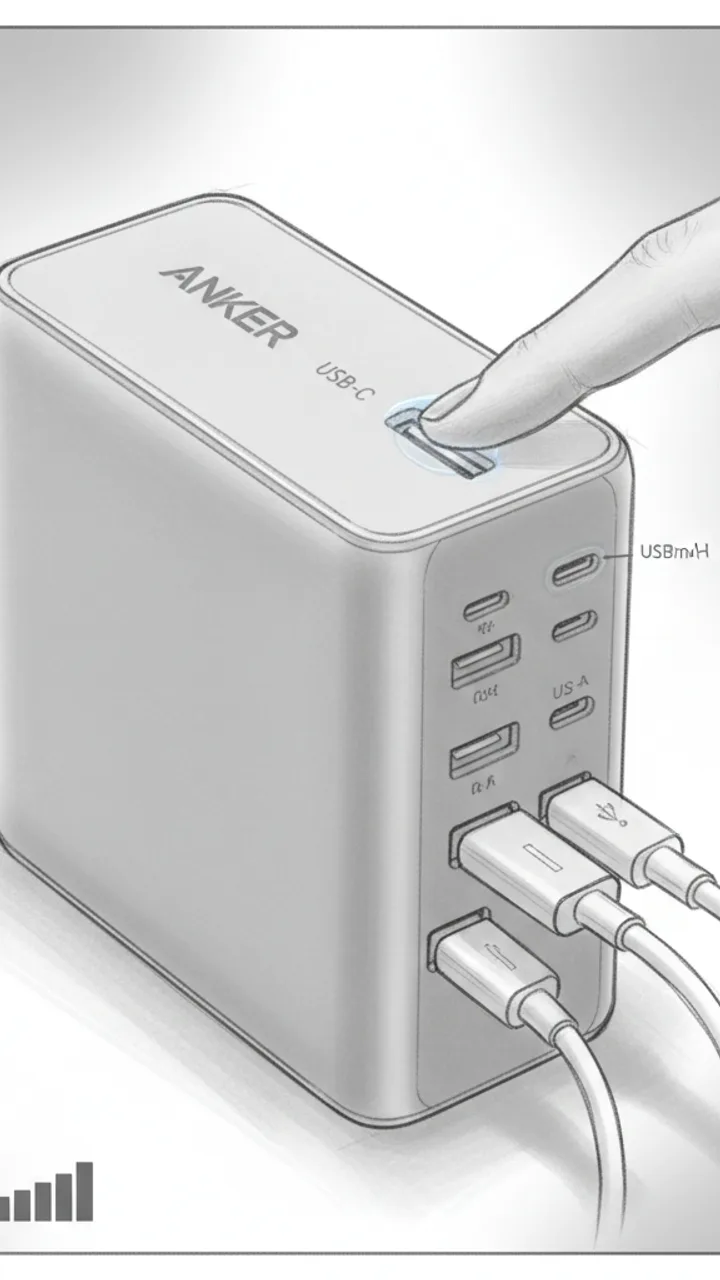
Port Breakdown
0:05 - 0:22 · 17s
Visual: Close-up macro shot rotating around the Anker Prime. Finger points to each port as it's named. Text overlays appear per port: 'USB-C Port 1 — up to 100W solo', 'USB-C Port 2 — up to 60W', 'USB-A — up to 22.5W'. Cut to all three cables plugged in simultaneously. Small on-screen wattage counter graphic showing combined draw.
Audio: Three ports — two USB-C, one USB-A. Solo on that top USB-C port, my MacBook Pro pulls a full 100 watts. Plug in two more devices and it redistributes dynamically. In my testing, MacBook was still pulling 67 watts with my phone and iPad both connected. That's not a given on cheaper GaN chargers.
Note: Use a USB-C power meter on screen if possible to show real wattage numbers — avoids any claim that feels fabricated.
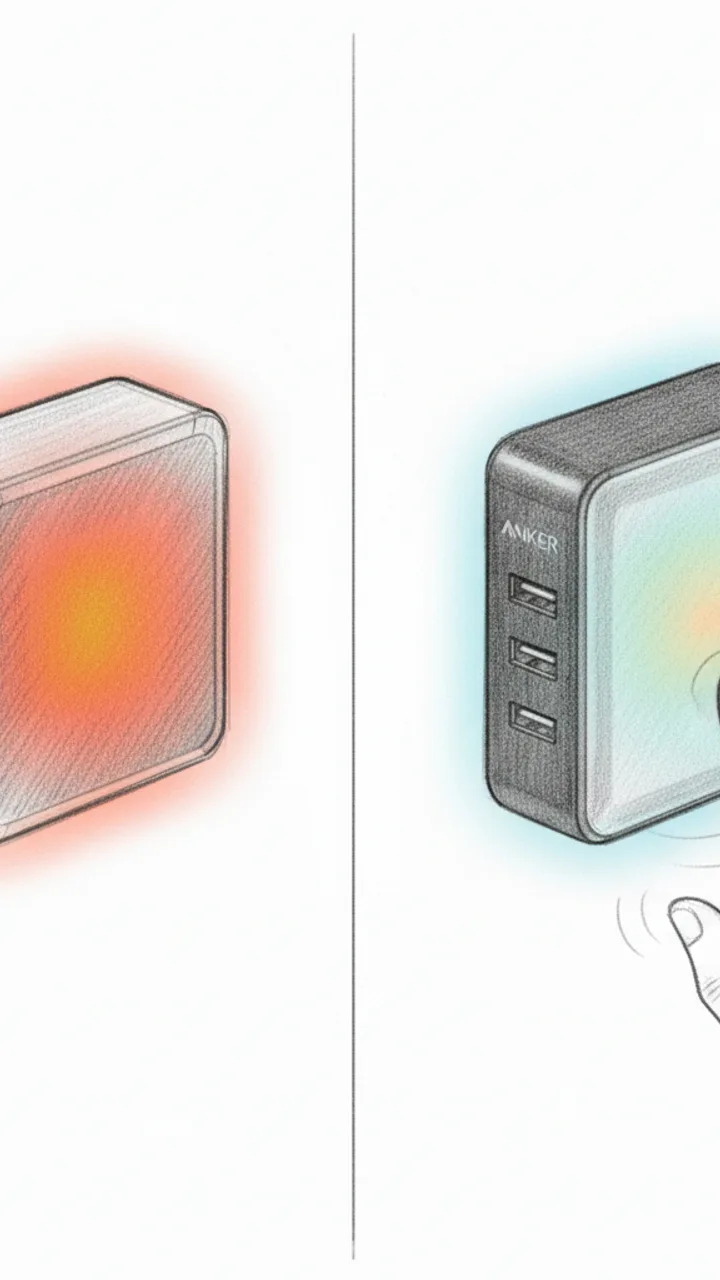
Thermal Check
0:22 - 0:42 · 20s
Visual: Side-by-side split screen: left shows a generic 65W non-GaN brick with a thermal camera overlay glowing orange-red after 30 minutes. Right shows the Anker Prime under the same thermal camera after 30 minutes at near-full load — cooler gradient. On-screen label: 'After 30 min at load'. Cut to hand touching the Anker Prime. Text overlay: 'Warm — not hot'
Audio: Thermal performance is where GaN either earns its price or doesn't. After 30 minutes pushing close to 90 watts total, in my testing the Anker Prime stayed warm to the touch — not the 'don't leave this plugged into your power strip' hot I've felt on older silicon chargers. The GaN internals are doing real work here.
Note: Use an actual thermal camera or FLIR app for authenticity. Do not use stock footage. If thermal camera isn't available, remove the split-screen and keep the hand-touch moment only.
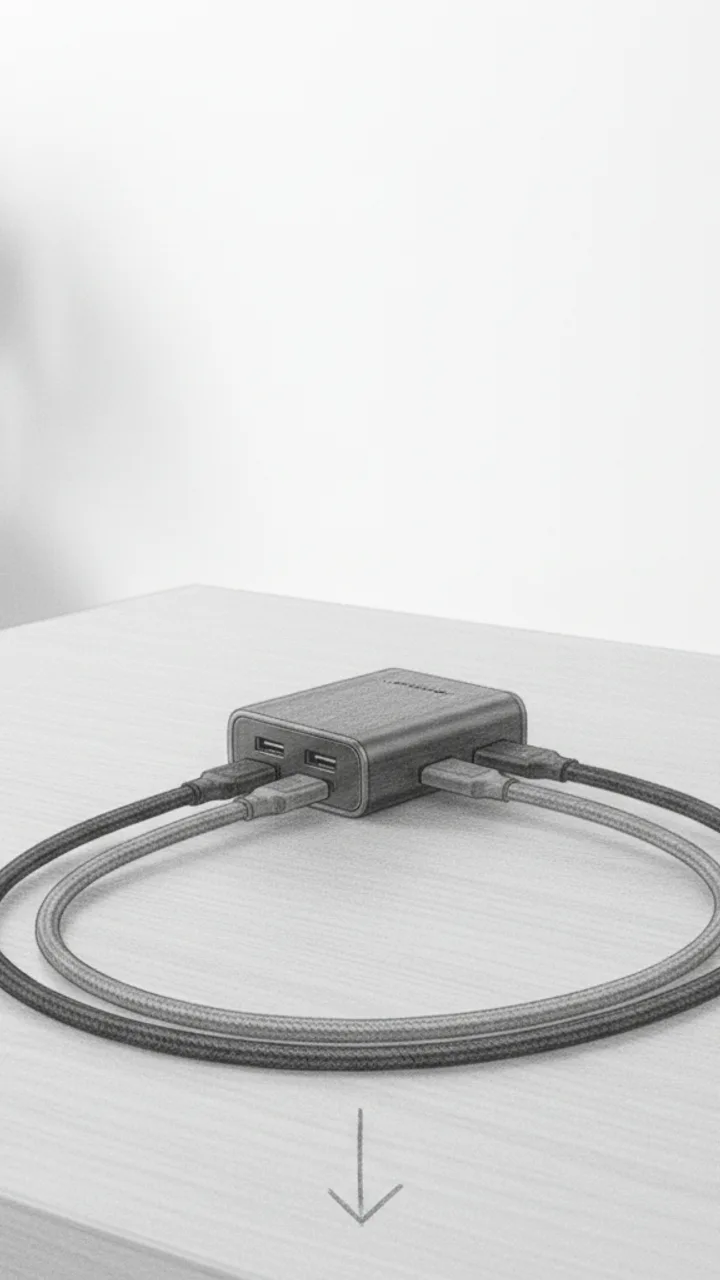
Payoff + CTA
0:42 - 0:55 · 13s
Visual: Wide shot of the clean desk with only the Anker Prime and three cables routed neatly. Slow zoom out. Text overlay: 'Link below'. Final frame: product alone on desk, no busy background.
Audio: For me, the desk math works out. One outlet, three devices, no compromise on speed. If your desk looks like mine did, link's below.
Note: Keep the CTA soft — no urgency language, no discount framing unless the brief specifically requests it. Let the visual do the selling.
Generate yours to see all 4 scenes unlocked
Includes hook variations, AI judge scores, and storyboard sketches per scene.
Generate your script freeThe anatomy of a high-retention performance benchmark
Translating the technical brief into a narrative storyboard
- Automated spec-checkers that flag if you missed a mandatory thermal limit or clock speed callout.
- A/B script variations that offer a 'deep dive' version for long-form and a 'snackable' version for shorts.
- Storyboard sketches that suggest specific macro angles for IO ports and chassis finishes.
- An AI judge panel that simulates how a skeptical viewer might react to a perceived 'shill' moment.
- Direct export to Word with formatted columns for audio, visual, and lighting cues.
The thermal throttling of production: Why b-roll timing matters
A script should never ask the B-roll to do more work than the data already supports.
Handling the 'But why' of technical script edge cases
Example hooks WeKlapp will generate
Common mistakes (and what to do instead)
✗ Reading specs directly from the box or a website during the first sixty seconds.
→ Use the opening for a unique value judgment; move the dry spec list to a visual overlay or a mid-roll 'deep dive' section.
✗ Failing to mention a known competitor's price point during the value analysis.
→ The generator includes a 'comparison' block that forces a mention of at least two alternatives to anchor the product's market position.
✗ Overloading the script with adjectives like 'insane' or 'powerful' instead of comparative data.
→ Replace subjective descriptors with objective deltas, such as '15% faster than last year's model' or '30 nits brighter than its closest rival.'
32g Lighter Changed My Aim
Hook: “I dropped 32 grams off my mouse and my accuracy went up — I have the data to prove it.”
Angle: A skeptical reviewer lets raw aim-test numbers do the talking when swapping a 95g daily driver for the 63g Vector Peripherals wireless.
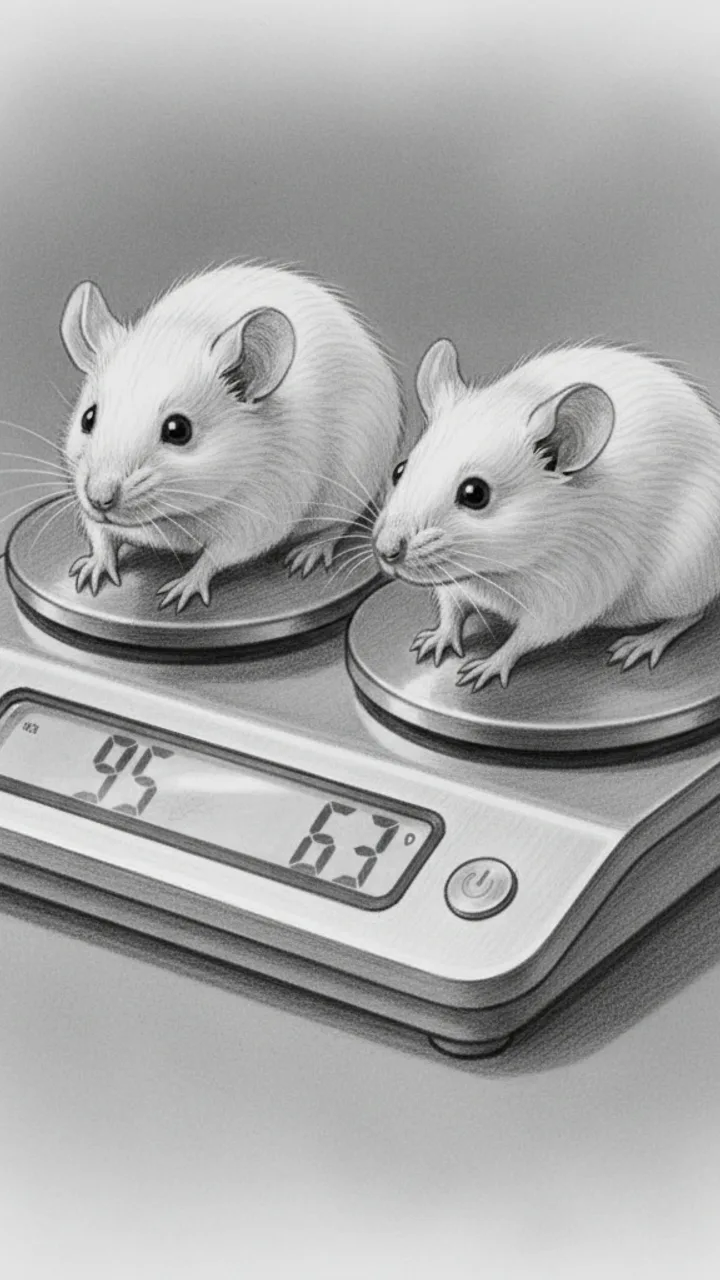
Hook
0:00 - 0:04 · 4s
Visual: Extreme close-up, both mice side by side on a scale — 95g on the left, 63g on the right. Text overlay slams in: '32G LIGHTER. DOES IT MATTER?' Cut to reviewer's face, deadpan.
Audio: I dropped 32 grams off my mouse and my accuracy went up — I have the data to prove it.
Note: Hook line doubles as thumbnail headline. Keep face cam reaction tight and dry — no hype.
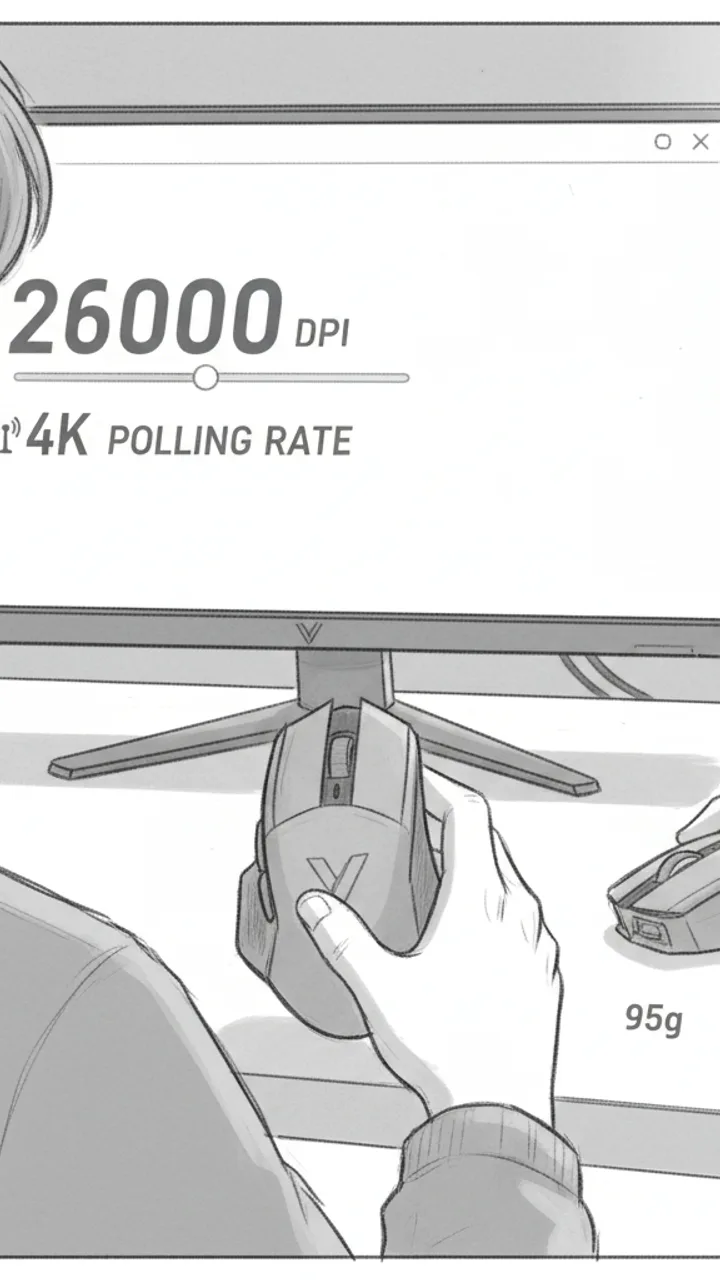
Spec Reality Check
0:04 - 0:18 · 14s
Visual: Over-the-shoulder shot, hands holding the Vector Peripherals mouse. Quick cut to driver software on monitor showing 26,000 DPI max and 4K polling rate. Text overlays: '26K DPI' and '4K POLLING' pop on screen as each is mentioned. Reviewer sets mouse down next to old 95g mouse.
Audio: On paper the Vector runs up to 26K DPI — I tested at 1600 — and it's pushing a 4K polling rate over wireless, which I was honestly skeptical about. Wireless latency used to be a real excuse. In my testing, I couldn't feel a difference from wired.
Note: Skeptical tone is key here. Pause slightly before 'I couldn't feel a difference' to let it land.
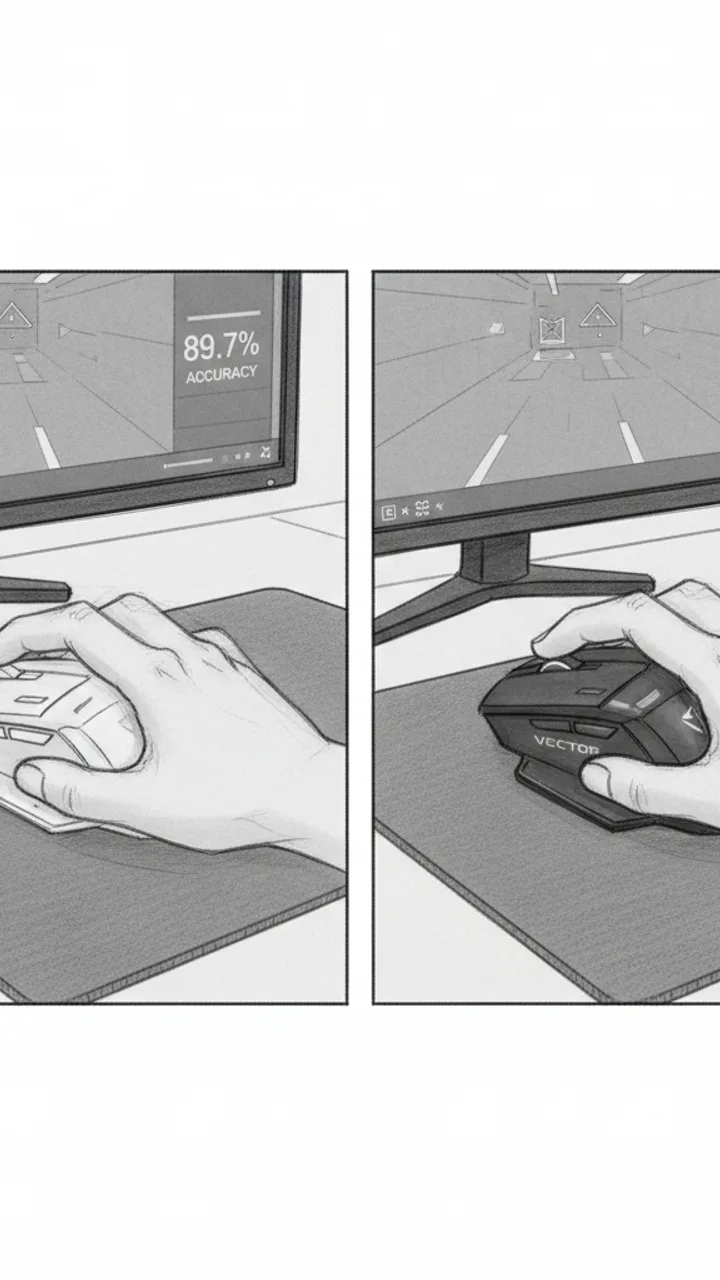
Aim Test — No Drama
0:18 - 0:44 · 26s
Visual: Split-screen: left side shows Kovaak's aim trainer session with the 95g mouse, right side shows same scenario with the Vector. On-screen text shows real session scores side by side — no cherry-picked rounds. Reviewer's hands visible on both clips. Text overlay: 'SAME SENS. SAME SCENARIO. 5 ROUNDS EACH.'
Audio: Same sensitivity, same Kovaak scenario, five rounds each — no picking the best ones. With my old 95g mouse I was averaging around here. With the Vector, my scores shifted up, and I noticed it most on longer flicks — less wrist fatigue killing my consistency toward the end of a session. I'm not going to tell you it fixed my aim. The lighter shell just got out of the way.
Note: Use actual recorded session data. Do not fabricate score numbers — leave a placeholder like '[SCORE A]' vs '[SCORE B]' for real fill-in during production. No clutch highlight clips.
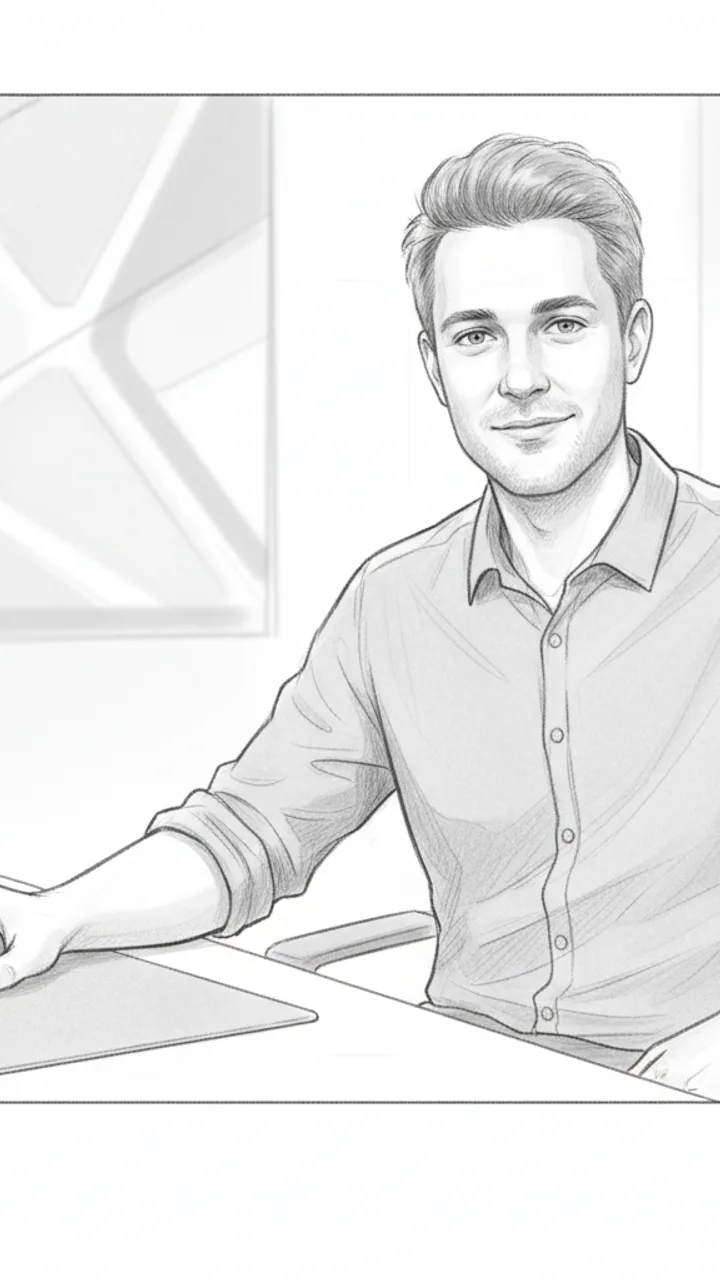
Verdict + CTA
0:44 - 0:55 · 11s
Visual: Reviewer on camera, medium shot, mouse in hand. Clean background. Text overlay at end: 'VECTOR PERIPHERALS — LINK BELOW'
Audio: If you're coming off a heavier mouse and you've been blaming your gear, the weight difference is real — at least for me. Full breakdown with battery life and click latency numbers is in the pinned comment. Link to the Vector is below if you want to check it.
Note: One CTA only. Tone stays matter-of-fact — no urgency language, no discount framing unless brand provides one.
Generate yours to see all 4 scenes unlocked
Includes hook variations, AI judge scores, and storyboard sketches per scene.
Generate your script freeFrequently asked questions
Can it match my specific testing methodology?
Yes. During setup, you define your 'testing pillars'—like battery life, gaming FPS, or build quality. The generator then prioritizes these pillars in every script it writes, ensuring your review structure remains consistent across different product categories.
What if the brand brief requires specific corporate jargon?
WeKlapp flags 'corporate-speak' and offers 'creator-voice' translations. It keeps the core meaning required by the brand's legal team but rephrases it to sound like something a human would actually say, preventing the 'sponsored segment' from feeling jarring.
Can it generate scripts for both long-form and short-form tech content?
It creates a master script and then offers 'derivative' exports. You get a 10-minute deep dive for YouTube and a 60-second 'fast facts' version for Reels or TikTok, with the hooks and pacing adjusted for each platform’s specific retention curves.
How does the AI judge panel work for tech reviews?
The panel consists of several AI personas: The Skeptic, The Newbie, and The Power User. They review your script for 'shill' flags, overly technical jargon that needs simplifying, or missed opportunities to answer common buyer objections.
Does it support multi-host or collaborative tech review scripts?
The export allows for multi-column formatting, making it easy to assign specific lines or benchmark demonstrations to different hosts or B-roll operators while keeping the overall technical narrative in sync.
Related script templates
Generate your first script in under a minute
Paste a channel link and a brand brief. WeKlapp handles the analysis, scriptwriting, judging, and storyboarding.
Start free