
Travel TikTok Script Generator
A Hostelworld brief hits your inbox on Monday morning while you are mid-layover in Mexico City. The campaign requires three distinct concepts for a 'solo traveler safety' series, but your brain is still processing a ten-hour flight and the logistics of your next check-in. The friction isn't the filming; it's translating a rigid PDF of brand requirements into the chaotic, fast-paced language of a budget travel TikTok without losing your personal voice. Most AI tools fail here because they suggest generic 'top five' lists that feel like a 2014 blog post. WeKlapp functions as an executive producer that understands why a 1.5-second jump cut of a hostel locker is more effective than a thirty-second talking head. It digests the brand’s specific 'must-haves' and maps them against your previous high-performing hooks, ensuring the transition into the sponsored segment doesn't destroy your retention graph.
Trained on what works in the travel corner of TikTok
Hook variations tuned to the first 2 seconds of attention
Brand-fit angles vetted by an AI judge panel
Scene-by-scene storyboards you can revise in one click
Ice Still Rattling After 8 Hours in a Hot Car
Hook: “I left this in my car all day — it was 94 degrees outside.”
Angle: Real-world heat stress test proves insulation claim through three sequential proof shots with no staging.
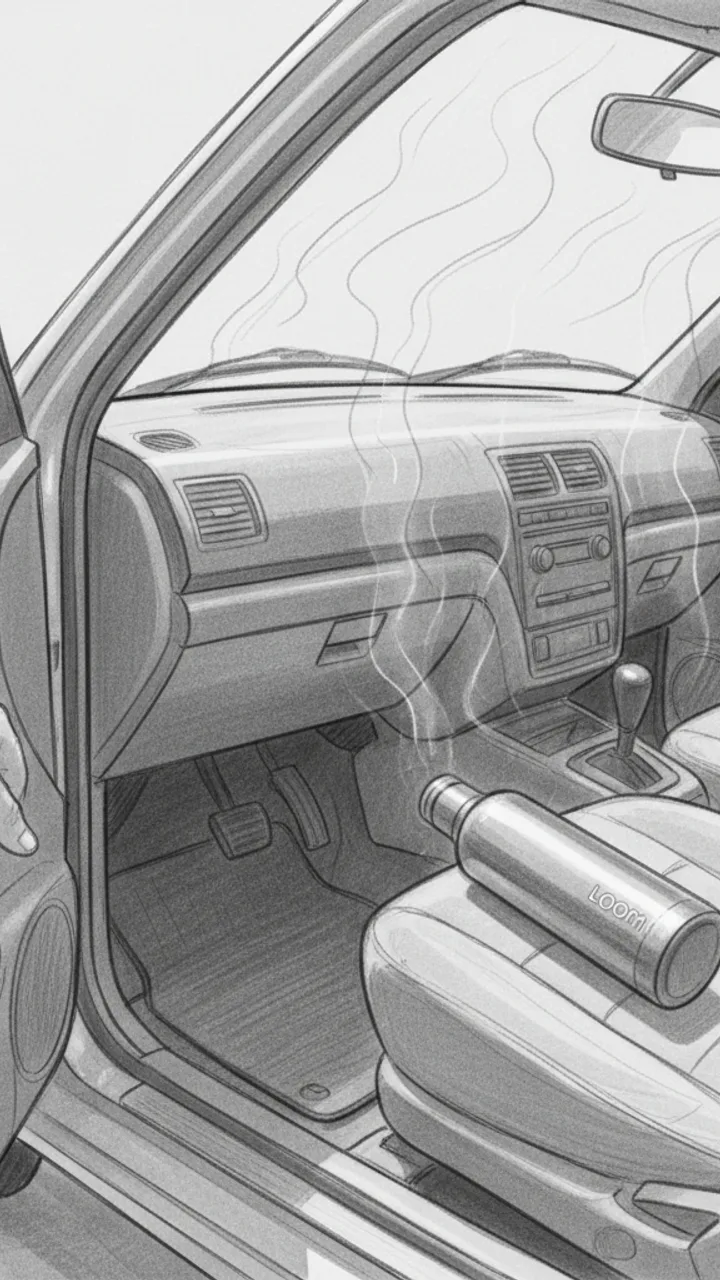
Hook — Hot Car Reveal
0:00 - 0:08 · 8s
Visual: POV handheld shot opening a sun-baked car door, heat shimmer visible. Creator reaches in and grabs the Loom Bottle off the passenger seat. Text overlay in bold white: 'LEFT IN A 94° CAR ALL DAY'
Audio: I left this in my car all day — it was 94 degrees outside. Dashboard was hot to the touch. Let's see what's inside.
Note: Shoot mid-afternoon for real heat shimmer. Keep the grab motion quick and confident — no hesitation.
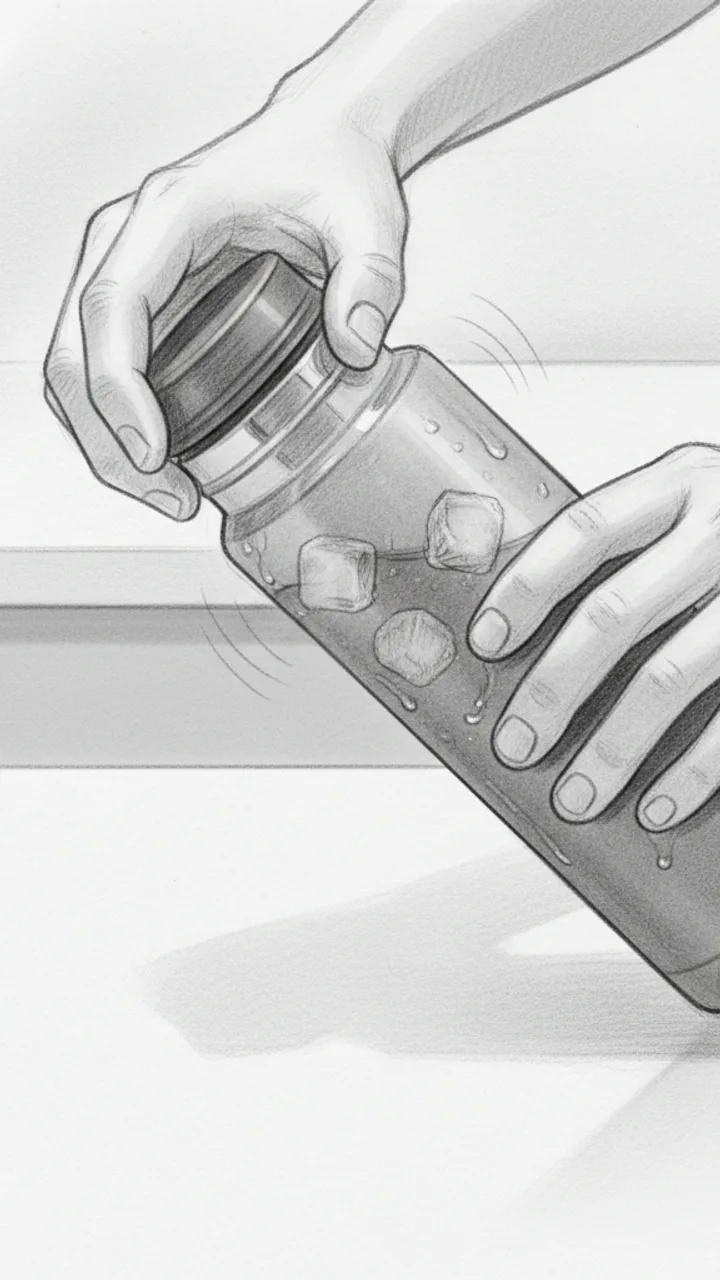
Proof Shot 1 — The Open
0:08 - 0:20 · 12s
Visual: Close-up shot of creator unscrewing the lid over a white countertop. Steam condensation visible on the outside of the bottle. Ice cubes audibly rattle as the lid comes off. Creator tilts bottle so ice is visible on camera. Text overlay: 'STILL ICE. 8 HOURS LATER.'
Audio: Eight hours later — listen to that. Full ice. In my testing I've never had it melt down this fast, but today was a real push and it held. You can see the condensation on the outside — that's how cold it still is in there.
Note: Capture the rattle sound clearly — this is the money audio moment. Use a lavalier mic or get the phone close to the bottle mouth.
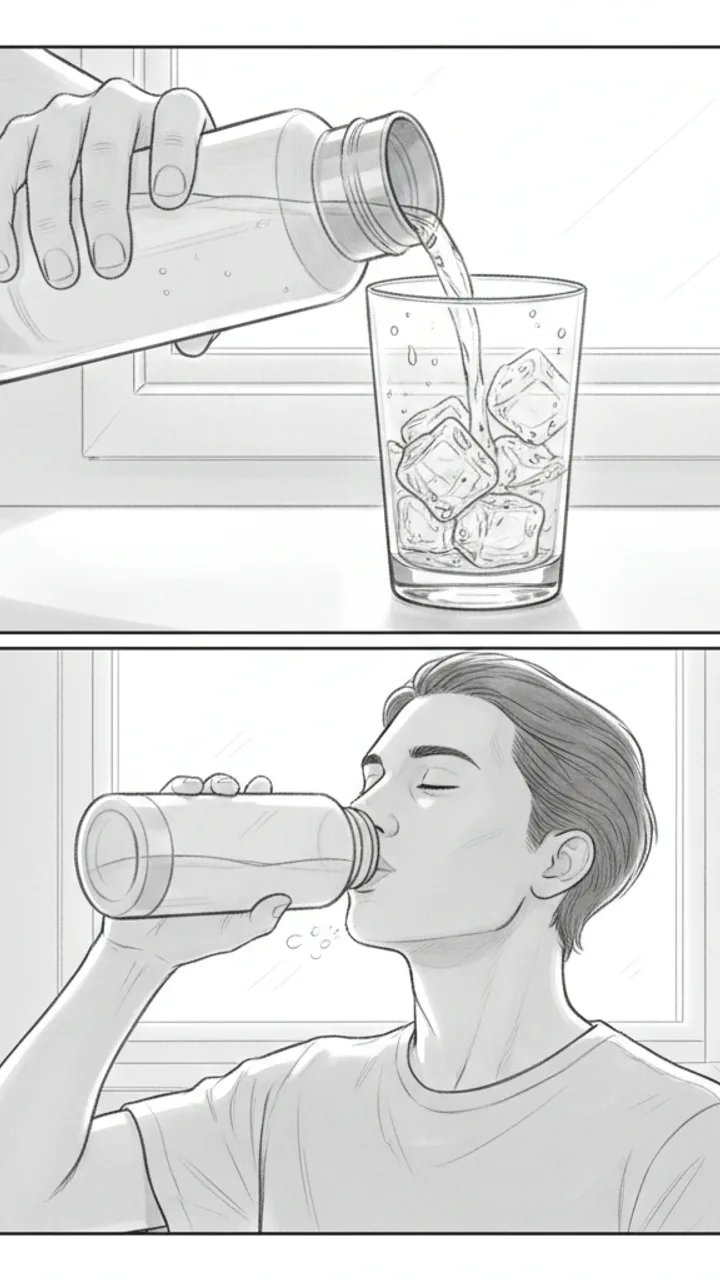
Proof Shot 2 and 3 — Pour and Taste
0:20 - 0:35 · 15s
Visual: Shot 1: Creator pours water over a clear glass — ice tumbles out, water is visibly cold with condensation forming on the glass instantly. Text overlay: 'COLD WATER. NOT LUKEWARM.' Shot 2: Creator takes a sip straight from the bottle, genuine reaction, slight exhale of relief. Text overlay: 'ACTUALLY COLD.'
Audio: That pour is cold — not just cool, actually cold. And drinking straight from it after sitting in a hot car? That's the whole point of the Loom Bottle for me. Link in bio if you want one — they go fast.
Note: The sip reaction needs to feel real. Do a genuine take, not performed surprise. The glass pour shot gives visual proof the ice survived — don't skip it.
Generate yours to see all 3 scenes unlocked
Includes hook variations, AI judge scores, and storyboard sketches per scene.
Generate your script freeThe Monday morning manual intake and brand alignment
Running the Tuesday gauntlet through the AI judge panel
- Style Consistency: Ensures the AI doesn't use words you would never say, like 'splendid' or 'breathtaking'.
- Retention Check: Analyzes if the brand mention happens too early or too abruptly for a solo traveler audience.
- Constraint Awareness: Flags scripts that require props or locations you didn't specify in your current itinerary.
- Safety Filter: Scans for phrasing that might trigger TikTok's community guidelines or shadowban filters.
Visualizing the Wednesday shot list and storyboard maps
The storyboard ensures you never return from a trip realizing you forgot the one specific three-second cut that makes the brand transition work.
Thursday export and the final Friday handoff
Example hooks WeKlapp will generate
Common mistakes (and what to do instead)
✗ Over-polishing the script so it sounds like a traditional TV commercial rather than a TikTok.
→ Use sentence fragments and slang that matches your specific niche's vocabulary; skip the formal introductions.
✗ Placing the brand name in the first three seconds of the video.
→ Focus on the traveler's pain point or a visual 'wow' moment first, then bridge into the brand as the solution around the 15-second mark.
✗ Ignoring the 'action' notes and just reading the text over static B-roll.
→ Coordinate every 2 seconds of audio with a new camera angle or movement to maintain the fast-paced TikTok rhythm.
14 Outfits. One Carry-On. Lisbon.
Hook: “Seven days in Lisbon. Fourteen outfits. This is the only bag I brought.”
Angle: A slow, cinematic packing reveal that proves one carry-on can hold a full Lisbon wardrobe — compression cubes and cobblestone included.
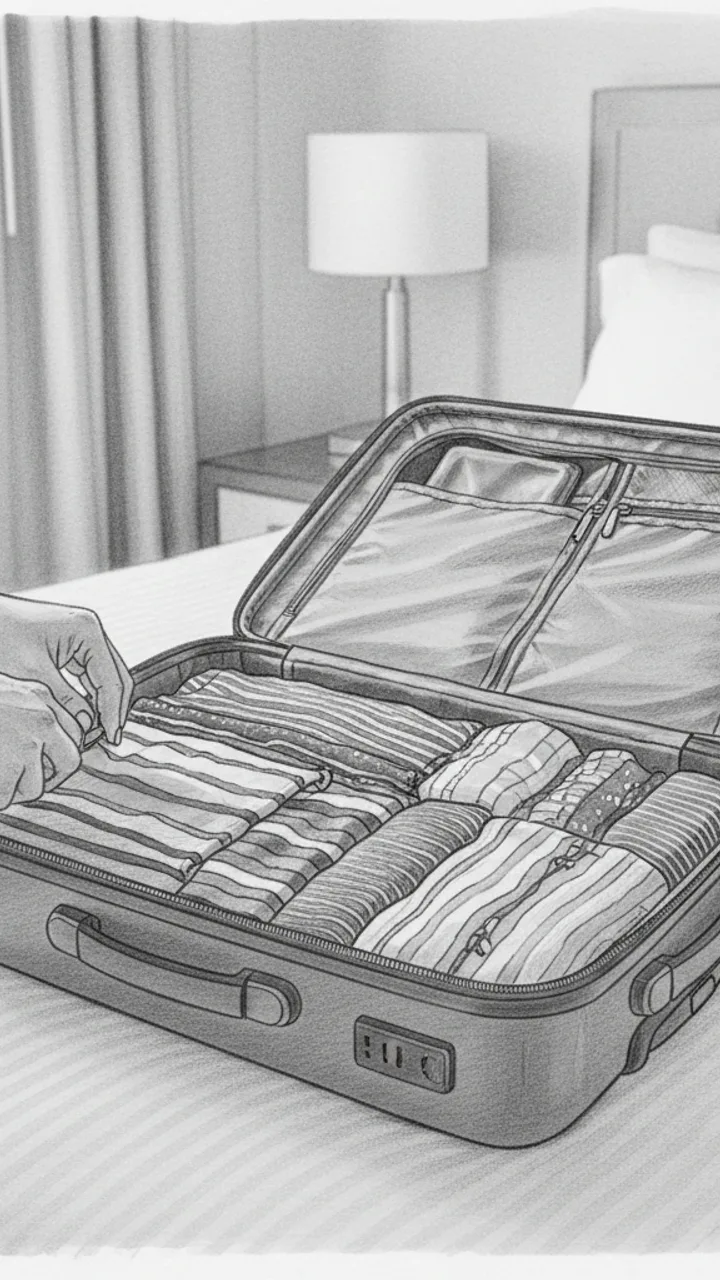
Hook
0:00 - 0:03 · 3s
Visual: Extreme close-up, hands unzipping a Range Travel Co. carry-on flat on a bed. Clothes are tightly packed, colorful, organized. Slow pull-back to reveal the full bag. Text overlay centered: '14 OUTFITS. ONE CARRY-ON. LISBON.'
Audio: Seven days in Lisbon. Fourteen outfits. This is the only bag I brought.
Note: No music intro — drop straight into ambient sound of zipper, then soft acoustic guitar fades in at 0:02. Hook line doubles as thumbnail headline.
The Pack
0:03 - 0:18 · 15s
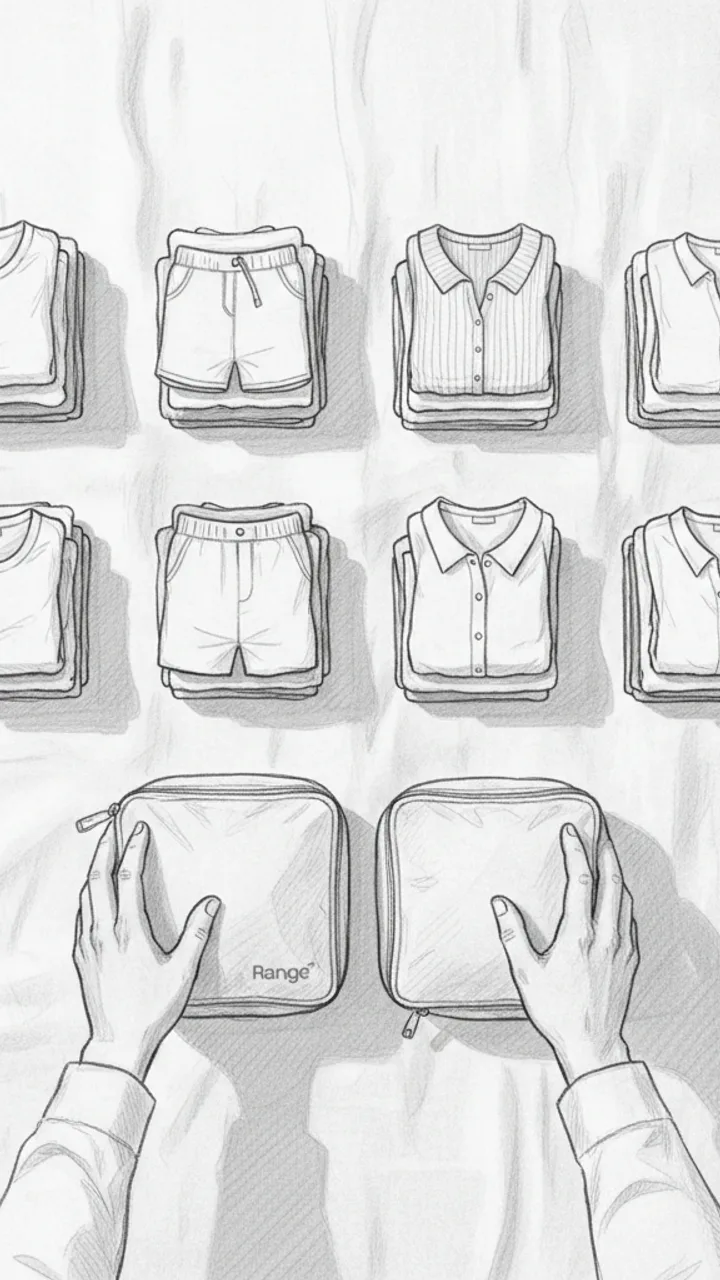
Visual: Flat lay overhead shot on white linen bed. Hands pull out two Range compression cubes and begin placing outfits side by side — one daytime look, one evening look, repeated across seven small stacks. Text overlays appear sequentially over each stack: 'Day 1', 'Day 2' ... 'Day 7'. Cut to close-up of a cube being compressed and zipped — fabric visibly flattens. Final cut: bag zipped shut, standing upright.
Audio: I used two compression cubes — one for day looks, one for nights. Each cube holds a full week on its own. For me, that's the difference between checking a bag and not. Everything fits, and nothing wrinkles the way I expected it to.
Note: Voice is calm, measured — not rushed. Let the visual breathe. Overlay text should feel editorial, not salesy.
Lisbon in Motion
0:18 - 0:30 · 12s
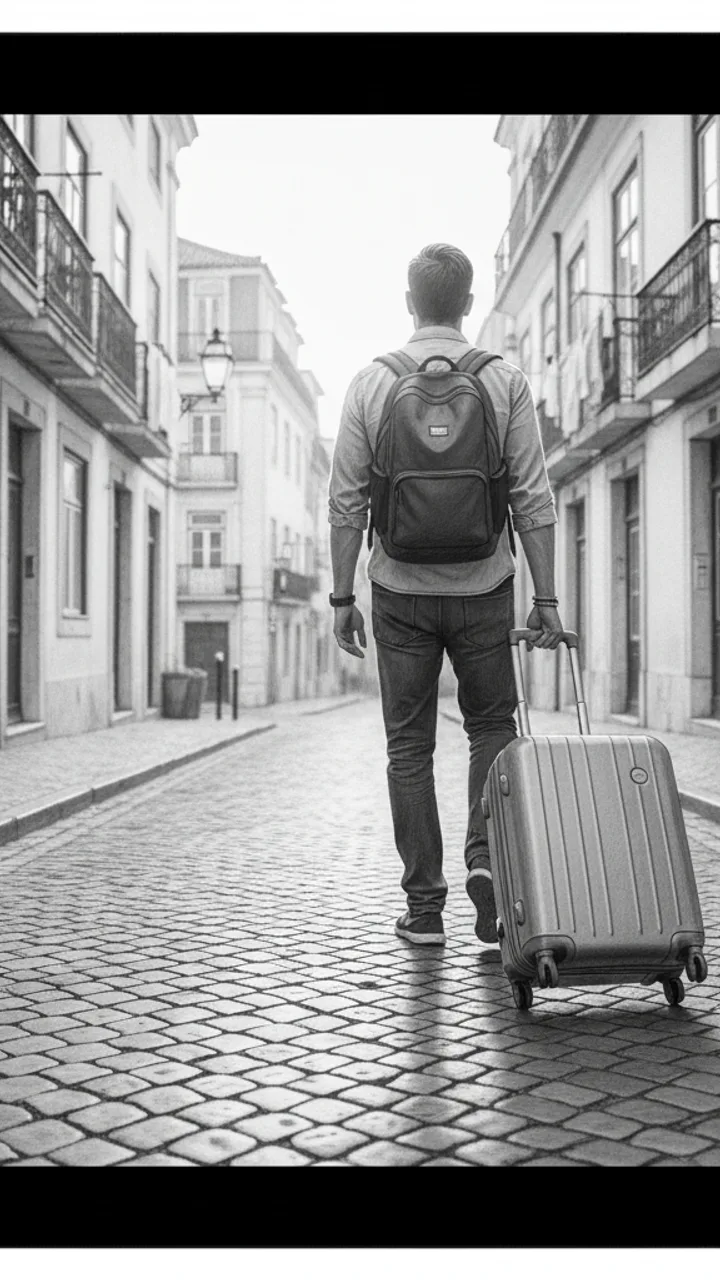
Visual: Golden hour. Handheld follow shot from behind — creator rolling the bag down a narrow Alfama cobblestone street. Cut to low ground-level angle showing wheels rolling over uneven stone. Cut to creator pausing at a viewpoint, Tagus River behind them, bag at their side. Text overlay bottom-left: 'Alfama, Lisbon'.
Audio: The cobblestones in Alfama will test any bag. These wheels held up the whole week — no dragging, no tipping. That part surprised me.
Note: Ground-level wheel shot is critical — 2 to 3 seconds minimum. This is the product proof moment. Keep it observational, not promotional.
Payoff + CTA
0:30 - 0:38 · 8s
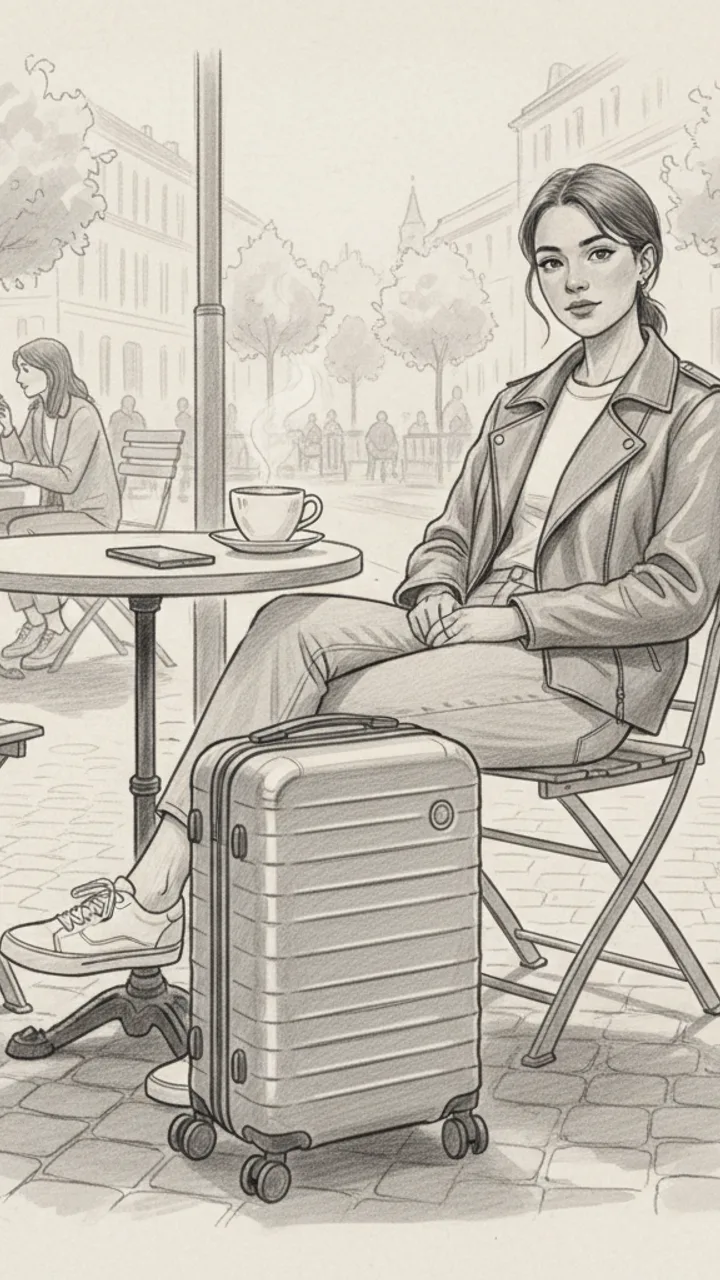
Visual: Creator sits at an outdoor café, coffee on the table, bag tucked neatly under the chair. Medium shot, slightly warm color grade. They glance at the camera naturally. Final frame freezes on the bag under the chair. Text overlay fades in: 'Range Travel Co. — link in bio'.
Audio: Budget travel does not have to mean bad gear. I'll link the bag below if you want to see the full breakdown.
Note: CTA is single and low-pressure. Freeze frame on bag gives a clean moment for any product tag sticker in post.
Generate yours to see all 4 scenes unlocked
Includes hook variations, AI judge scores, and storyboard sketches per scene.
Generate your script freeFrequently asked questions
How does the AI know my specific travel 'voice'?
WeKlapp analyzes your previous TikTok uploads to identify your speech patterns, common phrases, and even the typical length of your sentences. It doesn't just guess; it builds a linguistic profile so the generated scripts sound like you wrote them during a long train ride, not a marketing meeting.
Can it handle specific brand requirements for hostel or luggage deals?
Yes. When you upload a brand brief from a company like Hostelworld or Away, the AI prioritizes those specific talking points. It ensures that legal disclosures or specific product features are woven naturally into the narrative without breaking the conversational flow of your travel content.
Does this replace the need for a shot list?
It generates one for you. Alongside the script, you get timecoded visual cues. For example, if the script mentions 'security,' the shot list will suggest a 1.2-second clip of you using a luggage lock. It bridges the gap between 'what to say' and 'what to film'.
What if the AI suggestions are too difficult to film solo?
The judge panel scores scripts on production effort. If you are solo and don't have a tripod or a second person, you can set constraints so the AI avoids suggesting complex tracking shots or angles that require an extra hand, focusing instead on POV and handheld styles.
Is the script exportable to other apps?
Currently, scripts and storyboards export to Word and PDF. This allows you to keep the production notes open on your phone or tablet while you are out in the field, ensuring you have every shot you need before you leave a location.
Related script templates
Generate your first script in under a minute
Paste a channel link and a brand brief. WeKlapp handles the analysis, scriptwriting, judging, and storyboarding.
Start free